2015 · GS Paper 4 · Q6(a) · 5 marks
Today we find that in spite of various measures like prescribing codes of conduct, setting up vigilance cells/commissions, RTI, active media and strengthening of legal mechanisms, corrupt practices are not coming under control. Evaluate the effectiveness of these measures with justifications.
In short
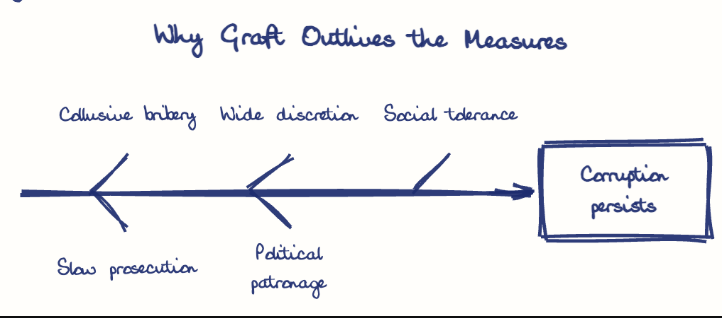
The measures are only partially effective: they have raised the cost of exposure but not of corruption, because discretion, collusion and slow prosecution persist. India still ranked 96 of 180 in Transparency International's Corruption Perceptions Index 2024.
Model answer
Ghissu Editorial · Verified 4 Oct 2026 · 274 words
Codes of conduct
The CCS (Conduct) Rules, 1964 list prohibitions but are rules of compliance, not ethics; the Second ARC's 2007 call for a statutory ethics code is still unmet, so their effect on conduct is low.
Vigilance bodies
The CVC only advises and relies on the CBI; the CAG's 2024 Andhra Pradesh report found ₹89.35 crore of accepted misappropriation unrecovered as of August 2023.
RTI and media
RTI exposed the Adarsh scam (2010), but over 4 lakh appeals were pending across 29 Information Commissions in 2024 (Satark Nagrik Sangathan), and paid news weakens the press.
Legal mechanisms
The PoC (Amendment) Act, 2018 punished bribe-giving, and the Lokpal began in 2019, yet Section 17A approvals and long trials keep convictions rare.
Opportunity intact
The measures punish after the act, while discretion and delay, the roots the Santhanam Committee named, remain; collusive corruption leaves no complainant.
Uncertain punishment
When cases stretch over a decade, the corrupt rationally discount the risk of being caught.
This model answer is indicative and the model can make mistakes; please verify key facts independently.
Practise this question
1Get the answer sheet
Sized for this question.
2Write your answer
Timed, by hand.
3Get it marked
Your score and what to fix.
This chapter in the exam
Challenges of corruption6 questions
Asked in 5 of 14 sittings since 2013
- 2022Whistle-blower, who reports corruption and illegal activities, wrongdoing and misconduct to the concerned authorities, runs the risk of being exposed to grave danger, physical harm and victimization by the vested interests, accused persons and his team. What policy measures would you suggest to strengthen protection mechanism to safeguard the whistle-blower?
- 2019"Non-performance of duty by a public servant is a form of corruption". Do you agree with this view? Justify your answer.
All 6 questions, sorted by sub-topic, with model answers and practice.
Question from the official UPSC Civil Services (Main) Examination 2015 paper. Answer written by Ghissu's engine and checked against our editorial standards. Found an error? Tell us and we correct it within 48 hours.