2022 · GS Paper 4 · Q6(a) · 10 marks
Whistle-blower, who reports corruption and illegal activities, wrongdoing and misconduct to the concerned authorities, runs the risk of being exposed to grave danger, physical harm and victimization by the vested interests, accused persons and his team. What policy measures would you suggest to strengthen protection mechanism to safeguard the whistle-blower?
In short
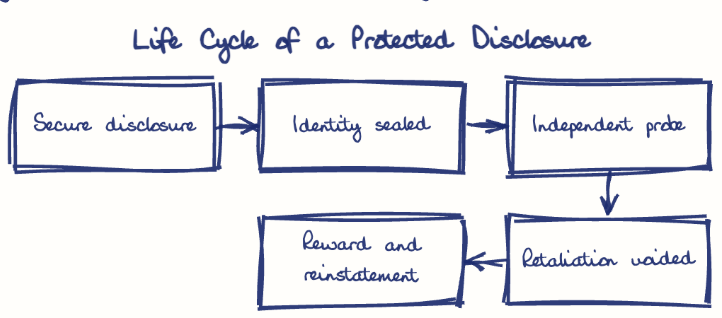
Whistle-blowers need a notified law, an independent receiving body, a reversed burden of proof on retaliation, physical protection and anonymous channels. The Whistle Blowers Protection Act, 2014, passed after Satyendra Dubey's 2003 murder exposed the danger, has still not been brought into force.
Model answer
Ghissu Editorial · Verified 4 Oct 2026 · 274 words
Operationalise the Act
Notify it with rules and drop the 2015 Amendment Bill's Official Secrets Act bar on disclosures.
Independent receiver
Let the Lokpal and Lokayuktas, not the accused's department, probe disclosures in fixed time, and cover the private sector too.
Reverse the burden
Presume an adverse transfer after disclosure retaliatory unless proved otherwise, as the EU Whistleblower Directive (2019) does.
Punish retaliation
Make victimisation of a whistle-blower and wilful exposure of identity criminal offences, ending impunity for vested interests.
Physical security
Extend the Witness Protection Scheme, 2018, upheld in Mahender Chawla (2018), to threatened whistle-blowers.
Anonymous channels
Encrypted portals should accept anonymous complaints through counsel and pay rewards on the US Dodd-Frank model of 10-30% of sanctions.
Remove the motive
After Amit Jethwa's killing in 2010, publishing the information an attacked RTI user sought makes silencing him pointless.
Culture of courage
Mission Karmayogi training should treat disclosure as loyalty to the Constitution, not betrayal of the department.
This model answer is indicative and the model can make mistakes; please verify key facts independently.
Practise this question
1Get the answer sheet
Sized for this question.
2Write your answer
Timed, by hand.
3Get it marked
Your score and what to fix.
This chapter in the exam
Challenges of corruption6 questions
Asked in 5 of 14 sittings since 2013
- 2019"Non-performance of duty by a public servant is a form of corruption". Do you agree with this view? Justify your answer.
- 2016"Corruption causes misuse of government treasury, administrative inefficiency and obstruction in the path of national development." Discuss Kautilya's views.
All 6 questions, sorted by sub-topic, with model answers and practice.
Question from the official UPSC Civil Services (Main) Examination 2022 paper. Answer written by Ghissu's engine and checked against our editorial standards. Found an error? Tell us and we correct it within 48 hours.