2016 · GS Paper 1 · Q1 · 12 marks
Early Buddhist Stupa-art, while depicting folk motifs and narratives successfully expounds Buddhist ideals. Elucidate.
In short
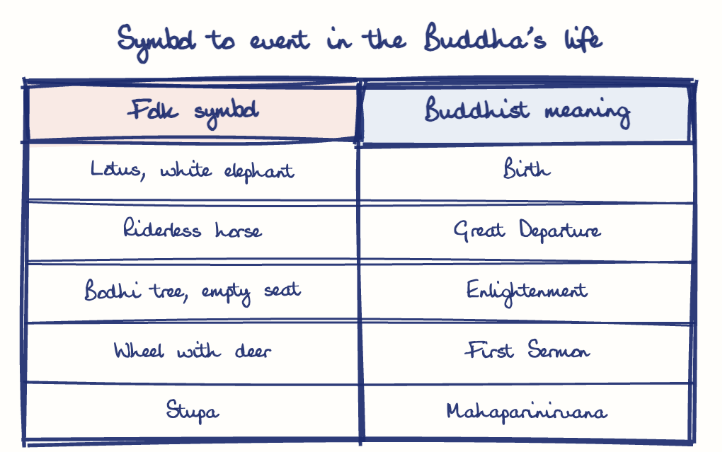
Early stupa art at Bharhut and Sanchi borrowed folk yakshis, animals, auspicious signs and popular tales, but used them to teach Buddhist ideals to lay devotees. The Buddha appears only through symbols such as the Bodhi tree and wheel, while Jatakas like Vessantara teach generosity and compassion.
Model answer
Ghissu Editorial · Verified 4 Oct 2026 · 304 words
Yakshas and yakshis
Bharhut's labelled Chulakoka Devata and Sanchi's salabhanjika bracket figures bring popular fertility and guardian deities onto Buddhist monuments.
Nature and auspicious signs
Elephants, peacocks, lotus scrolls and the overflowing vase (purnaghata) draw on folk ideas of abundance.
Jataka tales
Popular stories such as the Ruru deer Jataka at Bharhut and the Vessantara Jataka at Sanchi are carved as the Buddha's former lives.
Aniconism as doctrine
The Buddha is never shown in human form; footprints or an empty throne signal one who has passed beyond form and rebirth.
Jatakas as moral lessons
Vessantara teaches dana and the Chhaddanta and Ruru tales teach karuna, turning folk stories into lessons in the perfections.
Narrative for lay pedagogy
Continuous narration, as Vidya Dehejia shows, puts several episodes in one frame, read while circling the stupa in pradakshina.
Folk gods as followers
Yakshas and nagas appear as guardians and worshippers, absorbing popular cults into the Sangha, while donor inscriptions such as that of Vidisha's ivory carvers show a broad lay following.
This model answer is indicative and the model can make mistakes; please verify key facts independently.
Practise this question
1Get the answer sheet
Sized for this question.
2Write your answer
Timed, by hand.
3Get it marked
Your score and what to fix.
This chapter in the exam
Architecture8 questions
Asked in 8 of 14 sittings since 2013
- 2026Vijayanagara architecture exemplifies the amalgamation of past traditions with contemporary practices. Elucidate with examples.
- 2025Discuss the salient features of the Harappan architecture.
All 8 questions, sorted by sub-topic, with model answers and practice.
Question from the official UPSC Civil Services (Main) Examination 2016 paper. Answer written by Ghissu's engine and checked against our editorial standards. Found an error? Tell us and we correct it within 48 hours.