2016 · GS Paper 4 · Q5(a) · 5 marks
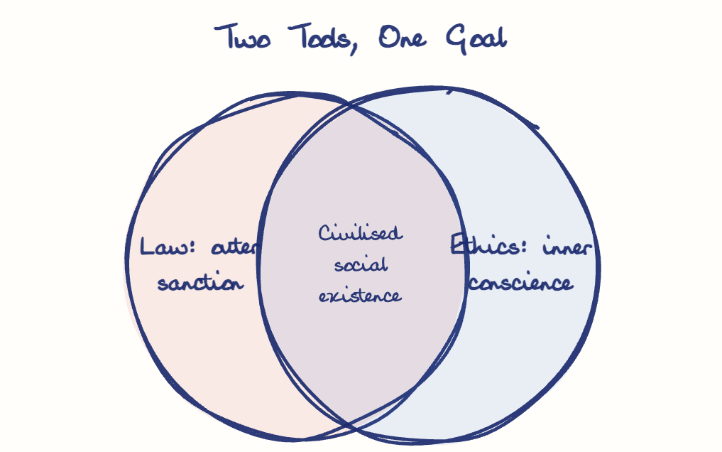
Law and ethics are considered to be the two tools for controlling human conduct so as to make it conducive to civilized social existence. Discuss how they achieve this objective.
In short
Law controls conduct from outside through enforceable sanctions and equal rules, while ethics works from within through conscience, guilt and willing obedience. Laws like Article 17 and the SC/ST (Prevention of Atrocities) Act, 1989 compel change, but only cultivated constitutional morality sustains it.
Model answer
Ghissu Editorial · Verified 4 Oct 2026 · 268 words
Deterrence through sanction
The Bharatiya Nyaya Sanhita, 2023, in force from July 2024, deters violence and fraud by making punishment certain and predictable.
Equal standards
Article 14 binds everyone to the same rules, replacing private revenge with impartial adjudication in courts.
Shield for the vulnerable
Article 17 abolished untouchability and the SC/ST (Prevention of Atrocities) Act, 1989 punishes caste violence that persuasion alone had not ended.
Codifying consensus
The Vishaka guidelines of 1997 grew into the POSH Act, 2013, turning settled ethics into binding duty.
Internalised conscience
Guilt, shame and self-respect make a person refuse a bribe even when detection is impossible; Gandhi called conscience a higher court than courts of justice.
Beyond legal reach
Kindness, gratitude and honesty in private dealings cannot be legislated, yet they make social life humane.
Willing obedience
Laws rooted in shared values are obeyed freely; Ambedkar reminded the Constituent Assembly that constitutional morality has to be cultivated.
This model answer is indicative and the model can make mistakes; please verify key facts independently.
Practise this question
1Get the answer sheet
Sized for this question.
2Write your answer
Timed, by hand.
3Get it marked
Your score and what to fix.
This chapter in the exam
Laws, rules, regulations and conscience as sources of ethical guidance16 questions
Asked in 9 of 14 sittings since 2013
- 2026Dr. B. R. Ambedkar had cautioned that employing civil disobedience within a constitutional democracy equates to endorsing 'anarchy'. How should modern democracies navigate the ethical dilemmas posed by civil disobedience movements that aim to promote social justice against policies that may raise genuine concerns?
- 2026Usually schools, working in remote areas, do not fully comply with government regulations. However, if the rules are enforced strictly, it would lead to most schools closing down. How should an administrator strike a balance between enforcement of rules and educational rights of children?
All 16 questions, sorted by sub-topic, with model answers and practice.
Question from the official UPSC Civil Services (Main) Examination 2016 paper. Answer written by Ghissu's engine and checked against our editorial standards. Found an error? Tell us and we correct it within 48 hours.