2017 · GS Paper 1 · Q16 · 15 marks
In what way can floods be converted into a sustainable source of irrigation and all-weather inland navigation in India ?
In short
Floods can become a sustainable resource when monsoon surplus is stored in multipurpose reservoirs, transferred between basins, recharged into aquifers and released to keep waterways navigable. The National Waterways Act, 2016 created 111 national waterways, while the Ken-Betwa link (2021) begins inter-basin transfer.
Model answer
Ghissu Editorial · Verified 4 Oct 2026 · 270 words
Multipurpose storage
Reservoirs such as the Damodar Valley Corporation's, built on the TVA model, hold flood peaks and irrigate the rabi crop; the CWC monitors 161 major reservoirs with 182.4 BCM of live storage (Ministry of Jal Shakti, 2025).
Inter-basin transfer
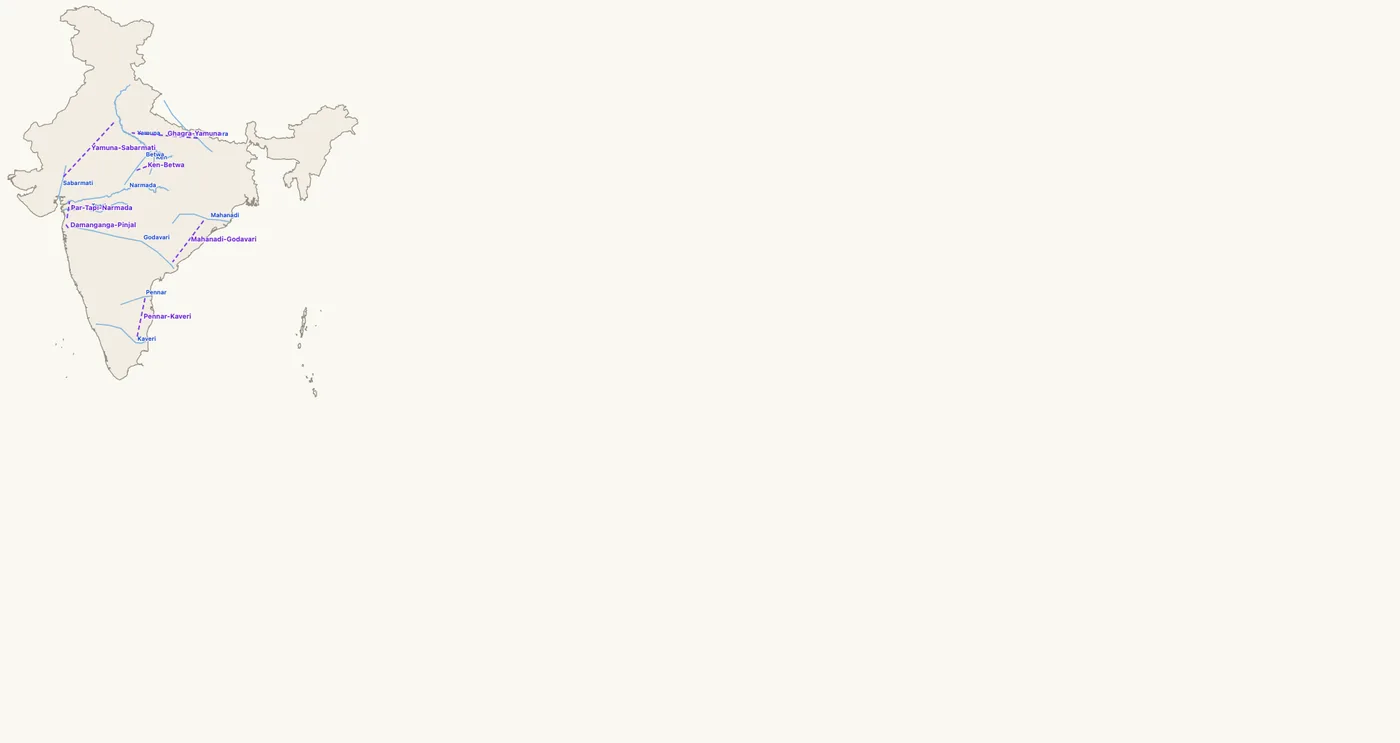
The National Perspective Plan (1980) proposes 30 links, and the Ken-Betwa link (approved 2021) is the first under way.
Floodwater into aquifers
IWMI's Underground Taming of Floods for Irrigation pilot in Rampur and Delhi's Palla floodplain ponds recharge groundwater for dry-season wells, as do Gujarat's Bhungroo systems.
Assured depth
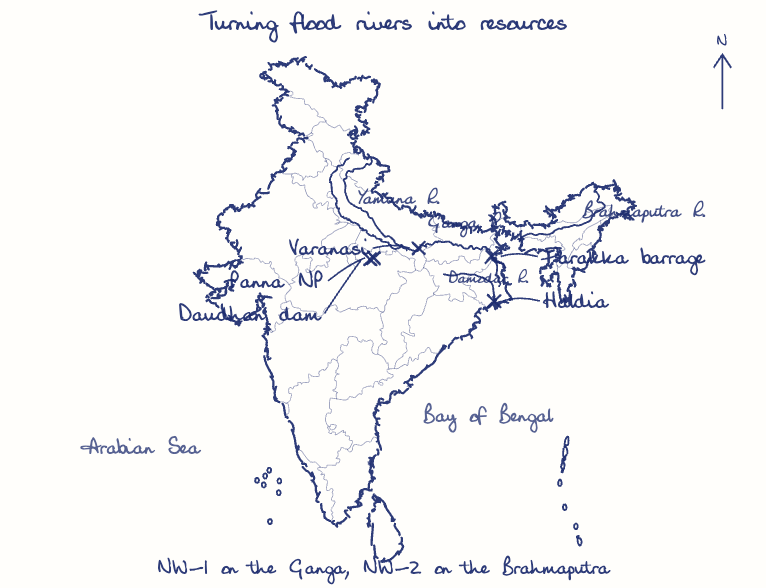
Barrages with navigation locks, like Farakka, and regulated releases keep lean-season depth on National Waterway-1.
Waterway network
The National Waterways Act, 2016 created 111 national waterways, and the Jal Marg Vikas Project built terminals at Varanasi, Sahibganj and Haldia.
Brahmaputra corridor
National Waterway-2 from Sadiya to Dhubri turns the flood-heavy Brahmaputra into a freight lifeline for the North-East.
Basin planning
Combine flood control, irrigation and navigation in single basin master plans.
Ecological safeguards
Protect environmental flows, floodplains and the rights of displaced people.
This model answer is indicative and the model can make mistakes; please verify key facts independently.
Practise this question
1Get the answer sheet
Sized for this question.
2Write your answer
Timed, by hand.
3Get it marked
Your score and what to fix.
This chapter in the exam
Resources and planning38 questions
Asked in 14 of 14 sittings since 2013
- 2026"Water resources are both an asset and a source of conflict in South Asia." Examine this statement giving examples.
- 2026Analyze the role of satellite-based technologies in achieving climate-smart agriculture and food security in India.
All 38 questions, sorted by sub-topic, with model answers and practice.
Question from the official UPSC Civil Services (Main) Examination 2017 paper. Answer written by Ghissu's engine and checked against our editorial standards. Found an error? Tell us and we correct it within 48 hours.