2017 · GS Paper 1 · Q6 · 10 marks
Inspite of adverse environmental impact, coal mining is still inevitable for development. Discuss.
In short
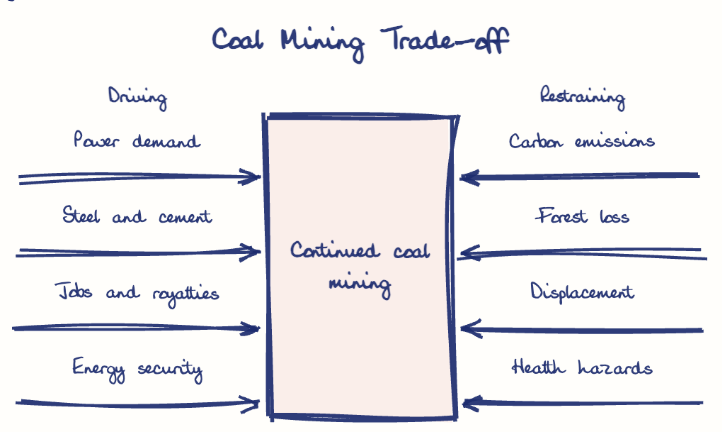
Despite deforestation, mine fires and tribal displacement, coal mining remains inevitable because coal gives India reliable baseload power and feeds steel, cement and jobs. India mined over one billion tonnes of coal in 2024-25, and coal generates about three-fourths of its electricity.
Model answer
Ghissu Editorial · Verified 4 Oct 2026 · 275 words
Reliable power
Solar and wind are intermittent and storage is costly, so coal gives the baseload that rising peak demand needs from domestic reserves.
Industrial backbone
Steel, cement and aluminium run on coal, and the National Steel Policy 2017 goal of 300 million tonnes of capacity rests on coking coal.
Jobs and revenue
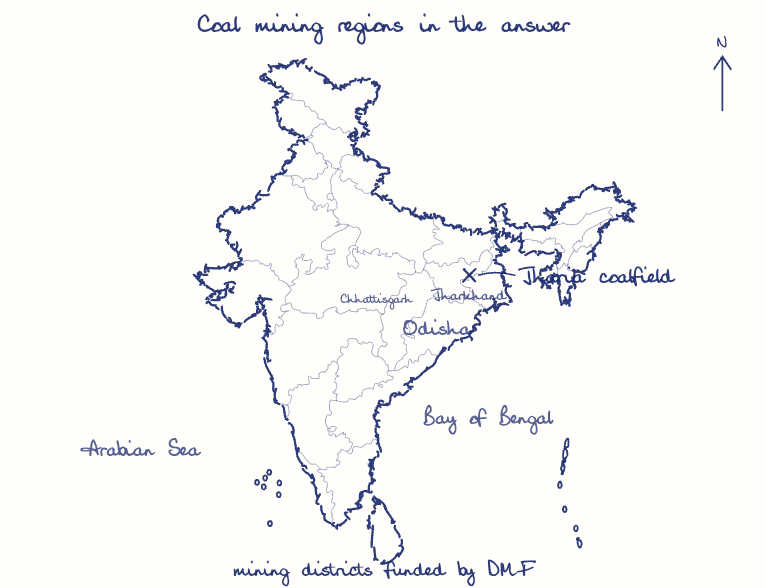
Coal India employs over two lakh people, and District Mineral Foundation funds (MMDR Amendment, 2015) finance mining districts.
Forests and water
Open-cast mining strips forests such as Hasdeo Arand in Chhattisgarh and brings acid mine drainage and falling water tables.
Air and health
The Jharia coalfield has burned underground since 1916, spreading respiratory disease, while coal dust from open-cast pits and haul roads fouls the air.
Displacement
Mines in Fifth Schedule areas uproot Adivasi communities with weak rehabilitation.
Cleaner mining
Coal gasification (100 million tonnes by 2030), flue gas desulphurisation, reclamation of mined land and a just-transition plan can cut the damage.
This model answer is indicative and the model can make mistakes; please verify key facts independently.
Practise this question
1Get the answer sheet
Sized for this question.
2Write your answer
Timed, by hand.
3Get it marked
Your score and what to fix.
This chapter in the exam
Resources and planning38 questions
Asked in 14 of 14 sittings since 2013
- 2026"Water resources are both an asset and a source of conflict in South Asia." Examine this statement giving examples.
- 2026Analyze the role of satellite-based technologies in achieving climate-smart agriculture and food security in India.
All 38 questions, sorted by sub-topic, with model answers and practice.
Question from the official UPSC Civil Services (Main) Examination 2017 paper. Answer written by Ghissu's engine and checked against our editorial standards. Found an error? Tell us and we correct it within 48 hours.