2018 · GS Paper 1 · Q15 · 15 marks
Defining blue revolution, explain the problems and strategies for pisciculture development in India.
In short
The Blue Revolution is the rapid rise in fish output through scientific aquaculture, and pisciculture is held back by poor seed, disease, weak cold chains and ecological damage, which PMMSY, FIDF, new technology and credit address. India's fish production doubled from 96 lakh tonnes in 2013-14 to 195 lakh tonnes in 2024-25.
Model answer
Ghissu Editorial · Verified 4 Oct 2026 · 296 words
Seed and cold chain
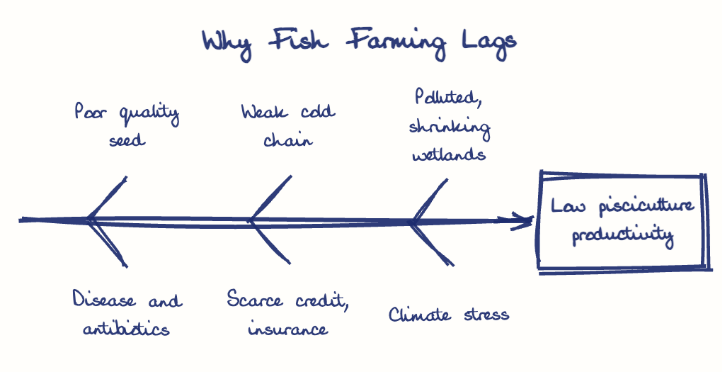
Uncertified fingerlings keep pond yields low, and the lack of ice plants and cold storage erodes the price of a highly perishable catch.
Disease and residues
White spot outbreaks wipe out shrimp ponds, and antibiotic residues have led to export rejections in markets such as the EU.
Ecology and conflict
Unregulated shrimp farms destroyed mangroves, prompting the Supreme Court's curbs in S. Jagannath v. Union of India (1996), while polluted, encroached wetlands shrink inland culture water.
Integrated funding
The PM Matsya Sampada Yojana (2020, ₹20,050 crore) and FIDF (2018) finance hatcheries and harbours; PMMSY has created 730 cold storages (PIB, 2025).
Seed and technology
Brood banks, certified hatcheries, reservoir cage culture and biofloc raise yields and diversify species.
Credit and markets
Kisan Credit Cards for fishers (2018-19), producer organisations and the 2025 GST cut on fish products from 12% to 5% lift incomes.
Ecosystem zoning
Keep farms away from mangroves and certify antibiotic-free produce.
Mariculture expansion
Open-sea cage farming of cobia and pompano, pioneered by CMFRI, can take coastal farming beyond shrimp.
This model answer is indicative and the model can make mistakes; please verify key facts independently.
Practise this question
1Get the answer sheet
Sized for this question.
2Write your answer
Timed, by hand.
3Get it marked
Your score and what to fix.
This chapter in the exam
Resources and planning38 questions
Asked in 14 of 14 sittings since 2013
- 2026"Water resources are both an asset and a source of conflict in South Asia." Examine this statement giving examples.
- 2026Analyze the role of satellite-based technologies in achieving climate-smart agriculture and food security in India.
All 38 questions, sorted by sub-topic, with model answers and practice.
Question from the official UPSC Civil Services (Main) Examination 2018 paper. Answer written by Ghissu's engine and checked against our editorial standards. Found an error? Tell us and we correct it within 48 hours.