2018 · GS Paper 1 · Q3 · 10 marks
Throw light on the significance of the thoughts of Mahatma Gandhi in the present times.
In short
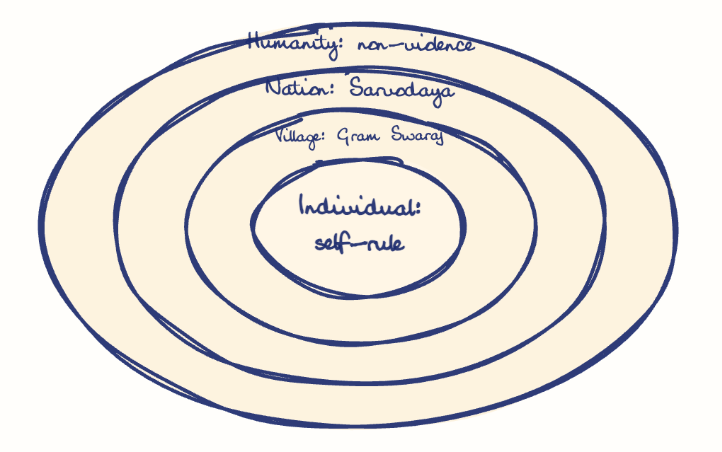
Gandhi's thoughts remain significant today as a compass for inclusive, decentralised, ethical and sustainable development, from Antyodaya and Gram Swaraj to trusteeship and satyagraha. His village republics gained constitutional force through the 73rd Amendment (1992), and the UN marks his birthday as the International Day of Non-Violence.
Model answer
Ghissu Editorial · Verified 4 Oct 2026 · 277 words
Antyodaya and the Talisman
Recalling the face of the poorest before any decision is the moral basis of last-mile targeting, from the Antyodaya Anna Yojana (2000) to the Aspirational Districts Programme (2018).
Gram Swaraj
Self-governing villages, a Directive Principle in Article 40, gained constitutional force through the 73rd Amendment (1992) and its three-tier panchayats.
Trusteeship
Holding wealth in trust for society anticipates mandatory CSR under Section 135 of the Companies Act, 2013.
Satyagraha
Non-violent resistance inspired Martin Luther King and Nelson Mandela and remains the template for peaceful protest and dialogue.
Need, not greed
His warning that the earth cannot meet every man's greed underpins sustainable consumption, echoed in Mission LiFE (2022).
Sarva Dharma Samabhava
Equal respect for all faiths, defended by his last fast in January 1948, answers communal polarisation.
Purity of means
His Seven Social Sins (1925), such as commerce without morality, remain a charter for ethics in public life.
This model answer is indicative and the model can make mistakes; please verify key facts independently.
Practise this question
1Get the answer sheet
Sized for this question.
2Write your answer
Timed, by hand.
3Get it marked
Your score and what to fix.
This chapter in the exam
Role of Masses and Personalities13 questions
Asked in 8 of 14 sittings since 2013
- 2026The significance of the Gandhian movements lay in the masses they mobilized. Elucidate.
- 2021Bring out the constructive programmes of Mahatma Gandhi during Non-Cooperation Movement and Civil Disobedience Movement.
All 13 questions, sorted by sub-topic, with model answers and practice.
Question from the official UPSC Civil Services (Main) Examination 2018 paper. Answer written by Ghissu's engine and checked against our editorial standards. Found an error? Tell us and we correct it within 48 hours.