2018 · GS Paper 2 · Q18 · 15 marks
The Citizens' Charter is an ideal instrument of organizational transparency and accountability, but it has its own limitations. Identify the limitations and suggest measures for greater effectiveness of the Citizens' Charter.
In short
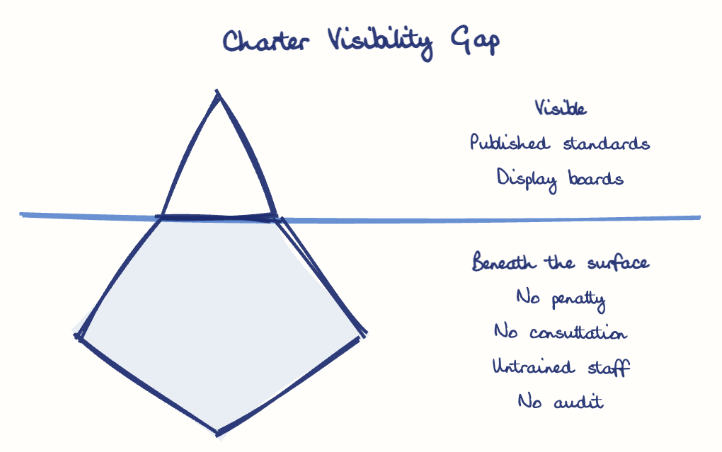
The Citizen's Charter is limited by lack of statutory force, drafting without users, generic standards, low awareness, untrained staff and toothless redress. Statutory service guarantees such as Karnataka's Sakala, which compensates citizens for delay, are the key measure for greater effectiveness.
Model answer
Ghissu Editorial · Verified 4 Oct 2026 · 275 words
Non-justiciable promise
Without statutory force, a delayed citizen has no legal remedy; the 2011 Citizens' Charter Bill lapsed.
Drafted without users
Departments write charters alone, promising what is easy rather than what citizens value.
Generic standards
Copied templates and soft promises leave no benchmark for accountability.
Low awareness
Charters rarely appear in regional languages or Braille, excluding the poor and less literate.
Attitudinal resistance
Untrained staff treat the charter as paperwork, keeping the culture of discretion alive.
Toothless redress and no audit
Breaches bring no compensation or penalty, and no independent agency evaluates compliance.
Rights-based enforcement
Give charters statutory force, as Karnataka's Sakala does by compensating citizens for delay and recovering it from the official.
Participatory charters
Draft charters with users and review them through an external agency, as the 2nd ARC advised.
Sevottam as the standard
Make Sevottam compliance mandatory and reward it through the PM's Awards for Excellence in Public Administration.
Social audit
Link charters to CPGRAMS and run social audits on the MGNREGA model.
This model answer is indicative and the model can make mistakes; please verify key facts independently.
Practise this question
1Get the answer sheet
Sized for this question.
2Write your answer
Timed, by hand.
3Get it marked
Your score and what to fix.
This chapter in the exam
Citizens Charters3 questions
Asked in 3 of 14 sittings since 2013
- 2024The Citizens' charter has been a landmark initiative in ensuring citizen-centric administration. But it is yet to reach its full potential. Identify the factors hindering the realisation of its promise and suggest measures to overcome them.
- 2013Though Citizens' charters have been formulated by many public service delivery organizations, there is no corresponding improvement in the level of citizens' satisfaction and quality of services being provided? Analyze.
Question from the official UPSC Civil Services (Main) Examination 2018 paper. Answer written by Ghissu's engine and checked against our editorial standards. Found an error? Tell us and we correct it within 48 hours.