2018 · GS Paper 3 · Q6 · 10 marks
What are the impediments in disposing the huge quantities of discarded solid wastes which are continuously being generated? How do we remove safely the toxic wastes that have been accumulating in our habitable environment?
In short
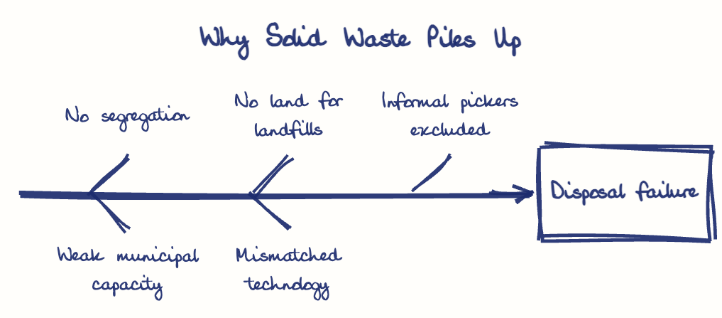
Solid waste disposal is blocked by unsegregated waste, weak and underfunded local bodies, scarce landfill land and mismatched technology, while accumulated toxic waste needs polluter-funded containment, treatment and remediation. About 337 tonnes of Union Carbide waste were moved from Bhopal to the Pithampur facility in 2025 and incinerated.
Model answer
Ghissu Editorial · Verified 4 Oct 2026 · 272 words
No segregation
Mixed wet, dry and hazardous waste cannot be composted or recycled, so it ends up in landfills despite the source segregation mandate of the Solid Waste Management Rules, 2016.
Weak local bodies
The CAG found that only 3 of 45 test-checked ULBs in Uttar Pradesh had waste plans, and that GHMC paid ₹313.20 crore for dry waste never processed.
Land and technology
No land for sanitary landfills turns dumps into hazards like Ghazipur, which partly collapsed in 2017, while waste-to-energy plants fail on wet, low-calorific waste and informal waste pickers stay outside the system.
Polluter pays
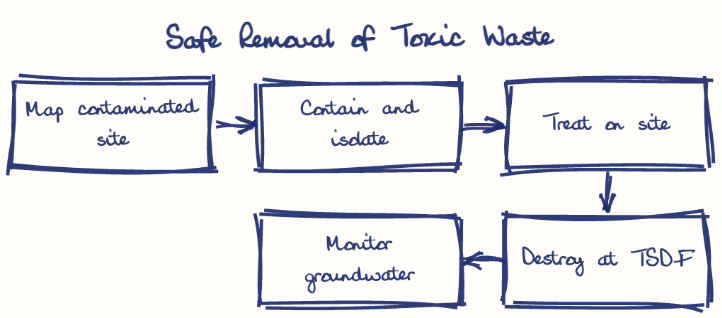
In Indian Council for Enviro-Legal Action (1996), the Bichhri case, the Supreme Court made polluting units fund remediation of the toxic sludge they left behind.
Engineered destruction
About 337 tonnes of Union Carbide waste were moved from Bhopal to the Pithampur facility in 2025 and incinerated under court supervision.
Biological and biomining routes
Bioremediation treats contaminated soil cheaply, and Indore's Devguradia dumpsite was biomined and reclaimed, with 459 dumpsites remediated in 2025.
This model answer is indicative and the model can make mistakes; please verify key facts independently.
Practise this question
1Get the answer sheet
Sized for this question.
2Write your answer
Timed, by hand.
3Get it marked
Your score and what to fix.
This chapter in the exam
Environmental Pollution and Degradation13 questions
Asked in 11 of 14 sittings since 2013
- 2026What are the challenges to solid waste management in India? Discuss the governmental policy framework on solid waste management. Discuss the success/failure cases of Delhi and Indore cities highlighting the salient feature of their solid waste management initiatives. (Answer in 250 words)
- 2025Examine the factors responsible for depleting groundwater in India. What are the steps taken by the government to mitigate such depletion of groundwater ?
All 13 questions, sorted by sub-topic, with model answers and practice.
Question from the official UPSC Civil Services (Main) Examination 2018 paper. Answer written by Ghissu's engine and checked against our editorial standards. Found an error? Tell us and we correct it within 48 hours.