2019 · GS Paper 1 · Q17 · 15 marks
How do ocean currents and water masses differ in their impacts on marine life and coastal environment? Give suitable examples.
In short
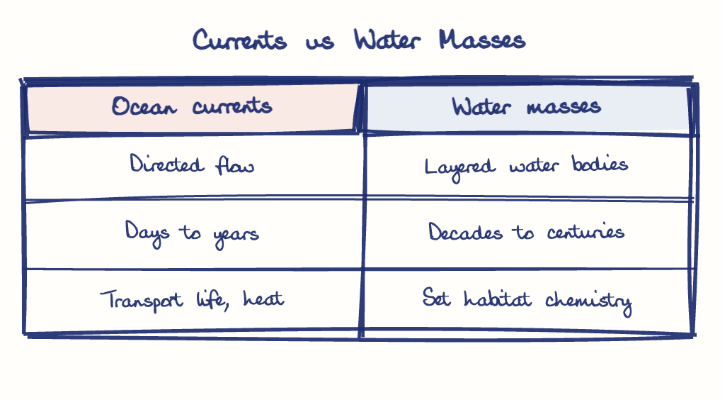
Ocean currents mainly transport heat, larvae, nutrients and pollutants, while water masses set the oxygen, salinity and temperature of habitats over centuries. Humboldt upwelling sustains Peru's anchoveta, whereas oxygen-poor upwelled water has created dead zones off Oregon since 2002.
Model answer
Ghissu Editorial · Verified 4 Oct 2026 · 307 words
Currents as highways
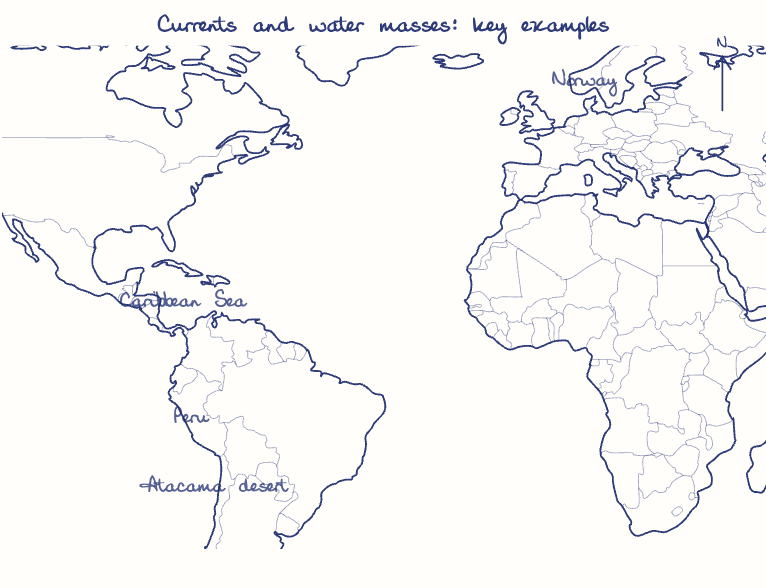
European eel larvae ride the Gulf Stream from the Sargasso Sea to Europe, and the same warm current lets Bermuda host the Atlantic's northernmost coral reefs.
Currents and upwelling
The Humboldt and Benguela currents drive nutrient upwelling, sustaining fisheries such as Peru's anchoveta.
Water masses as habitats
Antarctic Bottom Water ventilates abyssal life, while the oxygen-poor intermediate water of the Arabian Sea confines most fish to the surface, and fronts like the Antarctic Polar Front concentrate krill and whales.
Currents shape climate and debris
The cold Humboldt helps create the Atacama desert, and the North Pacific gyre gathers the Great Pacific Garbage Patch.
Water masses set chemistry
Upwelled low-oxygen, acidic deep water off Oregon has caused dead zones since 2002 and wrecked oyster hatcheries in 2007-08.
Stratification
The Bay of Bengal's low-salinity water mass keeps the surface warm, helping cyclones like Amphan (2020) strike the Sundarbans.
Track and protect
Pair current mapping with Argo profiling under INCOIS and protect fronts and upwelling zones as marine protected areas.
This model answer is indicative and the model can make mistakes; please verify key facts independently.
Practise this question
1Get the answer sheet
Sized for this question.
2Write your answer
Timed, by hand.
3Get it marked
Your score and what to fix.
This chapter in the exam
Water (Oceans)4 questions
Asked in 4 of 14 sittings since 2013
- 2022What are the forces that influence ocean currents? Describe their role in fishing Industry of the world.
- 2017Account for variations in oceanic salinity and discuss its multi-dimensional effects.
All 4 questions, sorted by sub-topic, with model answers and practice.
Question from the official UPSC Civil Services (Main) Examination 2019 paper. Answer written by Ghissu's engine and checked against our editorial standards. Found an error? Tell us and we correct it within 48 hours.