2019 · GS Paper 3 · Q8 · 10 marks
Vulnerability is an essential element for defining disaster impacts and its threat to people. How and in what ways can vulnerability to disasters be characterized? Discuss different types of vulnerability with reference to disasters.
In short
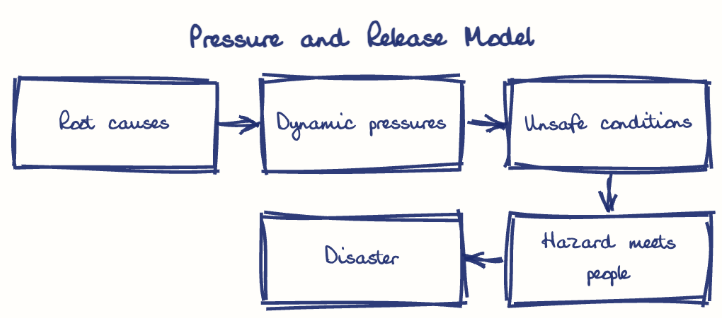
Vulnerability is characterised by exposure, sensitivity and the capacity to cope and adapt, and it takes physical, social, economic and environmental forms. The Pressure and Release model traces it from root causes through dynamic pressures to the unsafe conditions a hazard exploits.
Model answer
Ghissu Editorial · Verified 4 Oct 2026 · 273 words
Exposure
Vulnerability begins with the people and assets in harm's way, on a floodplain, in a seismic zone or along a cyclone coast.
Sensitivity and capacity
The IPCC treats vulnerability as the propensity to be harmed, shaped by sensitivity and a lack of capacity to cope and adapt; savings, insurance and literacy lower it.
Scale and measurement
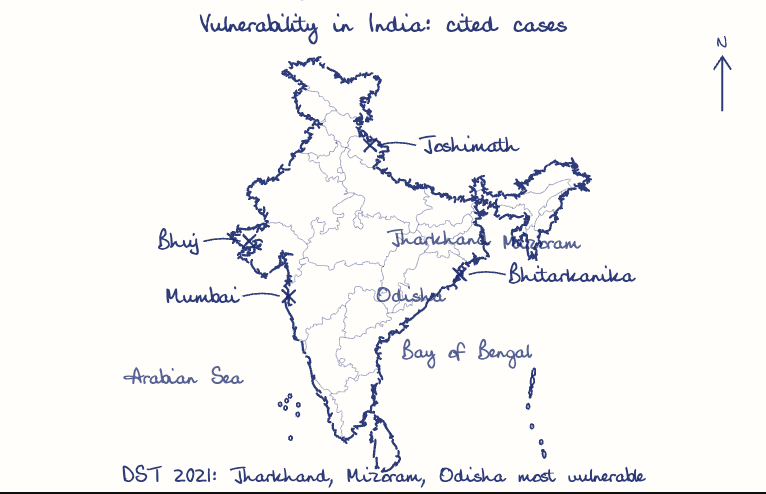
It varies by household and region and changes over time; the DST's 2021 climate vulnerability assessment ranked Jharkhand, Mizoram and Odisha the most vulnerable states.
Physical
Non-engineered masonry caused most deaths in Bhuj (2001), and Joshimath (2023) showed homes built on landslide debris.
Social
Oxfam (2005) found women far outnumbered men among the 2004 tsunami's dead in Cuddalore, and people with disabilities are often left out of evacuation plans.
Economic
Slum dwellers lost homes and wages in Mumbai's 2005 deluge, and uninsured farmers face ruin after one failed monsoon.
Environmental
Villages behind the Bhitarkanika mangroves suffered fewer deaths in the 1999 Odisha super cyclone than villages without that cover.
This model answer is indicative and the model can make mistakes; please verify key facts independently.
Practise this question
1Get the answer sheet
Sized for this question.
2Write your answer
Timed, by hand.
3Get it marked
Your score and what to fix.
This chapter in the exam
Disaster Risk Reduction & Mitigation6 questions
Asked in 6 of 14 sittings since 2013
- 2026Discuss how the contradiction between 'rapid infrastructure development' and 'disaster-risk reduction' in ecologically-sensitive areas of India can be managed, with suitable examples. (Answer in 150 words)
- 2024What is disaster resilience? How is it determined? Describe various elements of a resilience framework. Also mention the global targets of Sendai Framework for Disaster Risk Reduction (2015-2030).
All 6 questions, sorted by sub-topic, with model answers and practice.
Question from the official UPSC Civil Services (Main) Examination 2019 paper. Answer written by Ghissu's engine and checked against our editorial standards. Found an error? Tell us and we correct it within 48 hours.