2026 · GS Paper 3 · Q7 · 10 marks
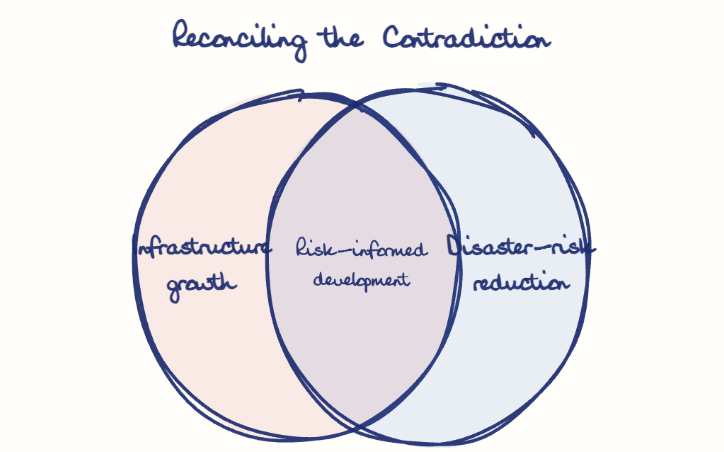
Discuss how the contradiction between 'rapid infrastructure development' and 'disaster-risk reduction' in ecologically-sensitive areas of India can be managed, with suitable examples. (Answer in 150 words)
In short
The contradiction between rapid infrastructure and disaster-risk reduction in fragile regions is managed through carrying-capacity zoning, hazard-mapped alignments, resilient design and continuous monitoring. Joshimath's subsidence and the Silkyara tunnel collapse in 2023 show the cost of building without risk screening.
Model answer
Ghissu Editorial · Verified 4 Oct 2026 · 176 words
Carrying-capacity zoning
Eco-sensitive zones on the lines of the Kasturirangan report (2013), with cumulative impact studies, should cap what each valley can bear.
Hazard-mapped alignment
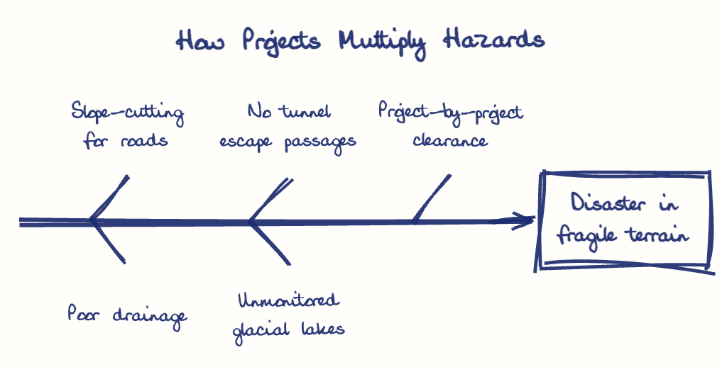
Roads and hydro projects should follow GSI landslide-susceptibility maps, avoiding the slope-cutting that destabilised Char Dham hillsides.
Resilient design
Slope bioengineering, drainage and tunnel escape passages, absent at Silkyara, should be standard, as the India-led CDRI urges.
Monitoring and oversight
Early warning on high-risk glacial lakes, needed after the South Lhonak flood destroyed the Teesta-III dam (2023), and community consent keep projects accountable.
This model answer is indicative and the model can make mistakes; please verify key facts independently.
Practise this question
1Get the answer sheet
Sized for this question.
2Write your answer
Timed, by hand.
3Get it marked
Your score and what to fix.
This chapter in the exam
Disaster Risk Reduction & Mitigation6 questions
Asked in 6 of 14 sittings since 2013
- 2024What is disaster resilience? How is it determined? Describe various elements of a resilience framework. Also mention the global targets of Sendai Framework for Disaster Risk Reduction (2015-2030).
- 2020Discuss the recent measures initiated in disaster management by the Government of India departing from the earlier reactive approach.
All 6 questions, sorted by sub-topic, with model answers and practice.
Question from the official UPSC Civil Services (Main) Examination 2026 paper. Answer written by Ghissu's engine and checked against our editorial standards. Found an error? Tell us and we correct it within 48 hours.