2024 · GS Paper 3 · Q17 · 15 marks
What is disaster resilience? How is it determined? Describe various elements of a resilience framework. Also mention the global targets of Sendai Framework for Disaster Risk Reduction (2015-2030).
In short
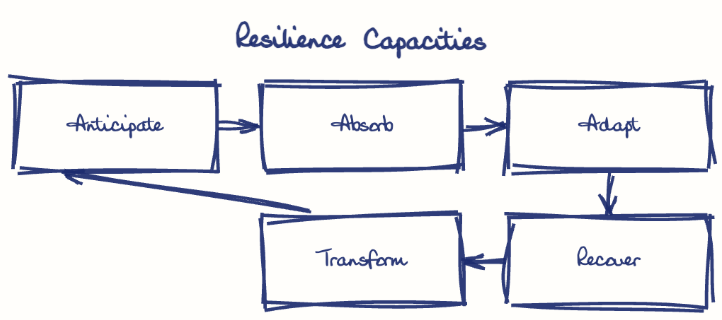
Disaster resilience is a system's ability to resist, absorb, adapt to and recover from hazards, determined by exposure, vulnerability and coping capacity and built through risk understanding, governance, finance and preparedness. The Sendai Framework sets seven global targets, four to reduce losses and three to increase capacity.
Model answer
Ghissu Editorial · Verified 4 Oct 2026 · 271 words
Exposure and vulnerability
People and assets in harm's way, and their physical, social, economic and environmental weaknesses, set the baseline.
Coping capacity
It is measured through the four Rs of robustness, redundancy, resourcefulness and rapidity (Bruneau, 2003), and indices such as Cutter's BRIC.
Risk understanding and governance
BMTPC's Vulnerability Atlas maps hazards, while the DM Act, 2005 and the Sendai-aligned NDMP (2016, revised 2019) assign roles.
Finance and preparedness
The 15th Finance Commission set up mitigation funds of about ₹45,724 crore (2020-26), backed by early warning and Build Back Better.
Reduce
Mortality, people affected, economic loss relative to GDP, and damage to critical infrastructure and basic services.
Increase
National and local DRR strategies by 2020, international cooperation, and access to multi-hazard early warning by 2030.
Spend on mitigation
Mitigation windows were under 20% utilised (World Bank paper for the 16th Finance Commission, 2025).
Local and natural buffers
Universal panchayat DM plans and mangrove restoration.
This model answer is indicative and the model can make mistakes; please verify key facts independently.
Practise this question
1Get the answer sheet
Sized for this question.
2Write your answer
Timed, by hand.
3Get it marked
Your score and what to fix.
This chapter in the exam
Disaster Risk Reduction & Mitigation6 questions
Asked in 6 of 14 sittings since 2013
- 2026Discuss how the contradiction between 'rapid infrastructure development' and 'disaster-risk reduction' in ecologically-sensitive areas of India can be managed, with suitable examples. (Answer in 150 words)
- 2020Discuss the recent measures initiated in disaster management by the Government of India departing from the earlier reactive approach.
All 6 questions, sorted by sub-topic, with model answers and practice.
Question from the official UPSC Civil Services (Main) Examination 2024 paper. Answer written by Ghissu's engine and checked against our editorial standards. Found an error? Tell us and we correct it within 48 hours.