2020 · GS Paper 1 · Q16 · 15 marks
India has immense potential of solar energy though there are regional variations in its developments. Elaborate.
In short
India's solar potential is immense, about 748 GW on NISE's estimate, but development is concentrated in Rajasthan, Gujarat, Karnataka and Tamil Nadu while Ladakh, the East and the Northeast lag on grid, land and discom constraints. Capacity rose from about 3 GW in 2014 to 129 GW by 2025.
Model answer
Ghissu Editorial · Verified 4 Oct 2026 · 289 words
Sunshine and land
Some 250 to 300 clear days a year and abundant wasteland give a NISE-estimated potential of about 748 GW, led by Rajasthan (about 142 GW) and Jammu and Kashmir with Ladakh (about 111 GW).
Rooftops, farms and targets
PM Surya Ghar aims at 1 crore rooftop homes, PM-KUSUM at 34.8 GW of farm solar, and India targets 280 GW of solar by 2030.
Western leaders
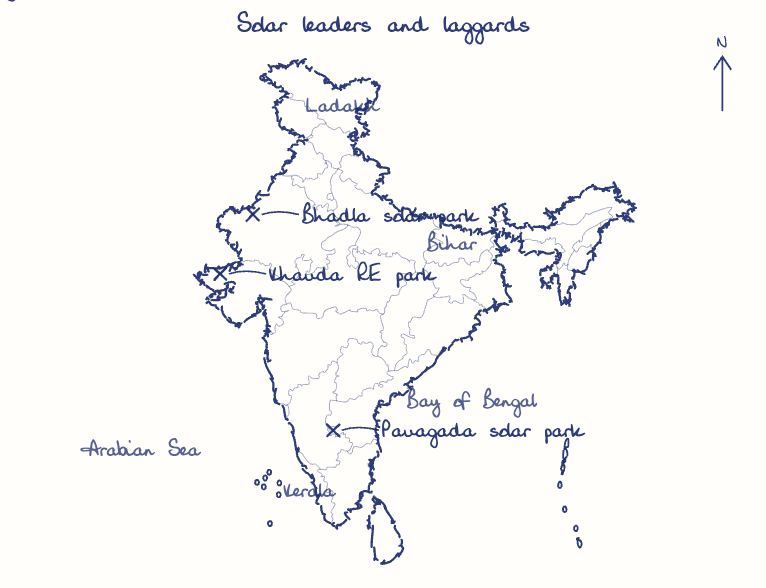
Rajasthan and Gujarat lead through desert land and early policy, with Bhadla (2,245 MW) and the 30 GW Khavda park.
Southern policy-led growth
Karnataka and Tamil Nadu rank high despite moderate sunshine, as in the 2,050 MW Pavagada park on leased farmland.
Laggards
Ladakh has some of India's best irradiance but little grid, so its 13 GW project awaits a transmission line, while Bihar, Kerala and the Northeast face costly land, cloudy monsoons and weak discoms.
Grid and siting
Green Energy Corridors with storage, rooftop and canal-top solar in land-poor States, and siting that spares Great Indian Bustard habitat would spread gains.
This model answer is indicative and the model can make mistakes; please verify key facts independently.
Practise this question
1Get the answer sheet
Sized for this question.
2Write your answer
Timed, by hand.
3Get it marked
Your score and what to fix.
This chapter in the exam
Resources and planning38 questions
Asked in 14 of 14 sittings since 2013
- 2026"Water resources are both an asset and a source of conflict in South Asia." Examine this statement giving examples.
- 2026Analyze the role of satellite-based technologies in achieving climate-smart agriculture and food security in India.
All 38 questions, sorted by sub-topic, with model answers and practice.
Question from the official UPSC Civil Services (Main) Examination 2020 paper. Answer written by Ghissu's engine and checked against our editorial standards. Found an error? Tell us and we correct it within 48 hours.