2021 · GS Paper 2 · Q7 · 10 marks
"'Earn while you learn' scheme needs to be strengthened to make vocational education and skill training meaningful." Comment.
In short
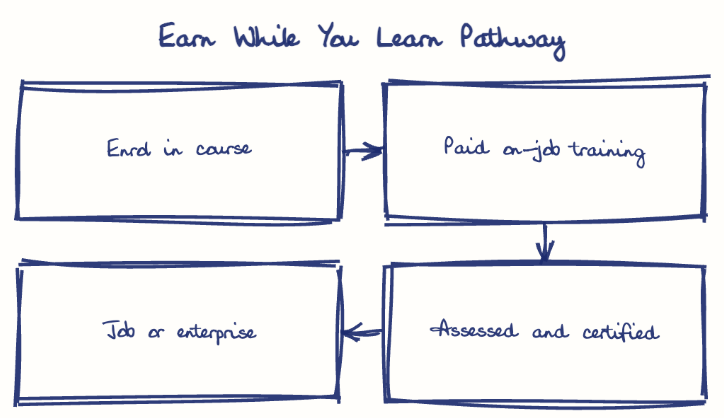
Earn while you learn makes vocational training meaningful by paying trainees, teaching job-ready skills on the shop floor and building in placement, but it needs employer-hosted, demand-led scale-up. The CAG's 2025 audit found only 41% of certified PMKVY short-term trainees were placed.
Model answer
Ghissu Editorial · Verified 4 Oct 2026 · 281 words
Lower opportunity cost
Stipends let poor youth train without losing the family income that otherwise pulls them out of courses.
Relevant skills
Shop-floor learning teaches what employers actually use, as Germany's dual system, with its low youth unemployment, shows.
Placement and dignity
Under NAPS (2016), the trainer is often the hirer, and MSDE counts 56 lakh apprentices since 2016; paid work also reduces the stigma attached to vocational streams.
Weak job outcomes
The CAG's 2025 PMKVY audit found only 41% of certified trainees placed, so stipends should favour employer-hosted training.
Demand mismatch
The five highest-demand sectors got only 22.7% of trainings, which needs district plans built on employer demand.
MSMEs left out
With 84% of enterprises informal, apprenticeship rules and stipend support must reach small firms and artisans.
Leaky payments
About 36% of PMKVY candidates missed the Rs 500 DBT owing to bank-account gaps, so stipends must reach verified accounts on time.
This model answer is indicative and the model can make mistakes; please verify key facts independently.
Practise this question
1Get the answer sheet
Sized for this question.
2Write your answer
Timed, by hand.
3Get it marked
Your score and what to fix.
This chapter in the exam
Education9 questions
Asked in 8 of 14 sittings since 2013
- 2026Should education be treated primarily as a welfare obligation of the state or as a strategic investment for building a globally competitive, knowledge-driven nation ? Critically evaluate.
- 2023Skill development programmes have succeeded in increasing human resources supply to various sectors. In the context of the statement analyse the linkages between education, skill and employment.
All 9 questions, sorted by sub-topic, with model answers and practice.
Question from the official UPSC Civil Services (Main) Examination 2021 paper. Answer written by Ghissu's engine and checked against our editorial standards. Found an error? Tell us and we correct it within 48 hours.