2021 · GS Paper 3 · Q17 · 15 marks
Describe the major outcomes of the 26th session of the Conference of the Parties (COP) to the United Nations Framework Convention on Climate Change (UNFCCC). What are the commitments made by India in this conference ?
In short
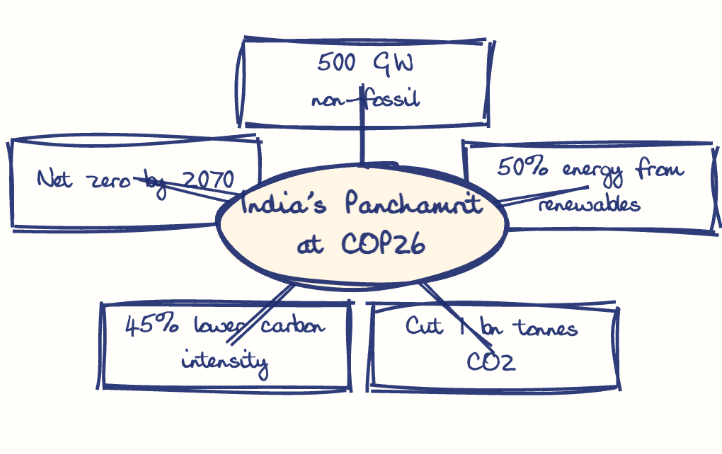
COP26 in Glasgow produced the Glasgow Climate Pact, calling for a phase-down of unabated coal and stronger 2030 targets, and completed the Paris Rulebook. India announced the Panchamrit, including 500 GW of non-fossil capacity by 2030 and net zero by 2070.
Model answer
Ghissu Editorial · Verified 4 Oct 2026 · 292 words
Glasgow Climate Pact
For the first time a COP decision named fossil fuels, calling for a "phase-down" of unabated coal and asking countries to strengthen 2030 targets to keep 1.5°C within reach.
Paris Rulebook completed
Rules for Article 6 carbon markets and a common transparency format were agreed.
Finance and pledges
Adaptation finance was to double by 2025, the missed USD 100 billion goal was noted with regret, and over 100 countries joined the Global Methane Pledge, though loss and damage got only a dialogue.
Panchamrit in practice
Announced on 1 November 2021 and formalised in the updated NDC of August 2022, it includes a 50% non-fossil share of installed power capacity by 2030, which India crossed in 2025.
LiFE and coalitions
India proposed Lifestyle for Environment and launched IRIS under CDRI and, with the UK, the Green Grids Initiative-One Sun One World One Grid.
Equity diplomacy
India secured coal "phase-down" over "phase-out" and sought USD 1 trillion in climate finance, invoking CBDR.
Finance and just transition
The COP29 finance goal must arrive as grants and concessional money, and coal phase-down must come with reskilling in coal belts.
This model answer is indicative and the model can make mistakes; please verify key facts independently.
Practise this question
1Get the answer sheet
Sized for this question.
2Write your answer
Timed, by hand.
3Get it marked
Your score and what to fix.
This chapter in the exam
Conservation19 questions
Asked in 11 of 14 sittings since 2013
- 2026Discuss the aim and goals of Kunming-Montreal global biodiversity framework. Mention India's commitments and initiatives to achieve the goals and targets of this framework giving suitable examples. (Answer in 150 words)
- 2025What is Carbon Capture, Utilization and Storage (CCUS) ? What is the potential role of CCUS in tackling climate change ?
All 19 questions, sorted by sub-topic, with model answers and practice.
Question from the official UPSC Civil Services (Main) Examination 2021 paper. Answer written by Ghissu's engine and checked against our editorial standards. Found an error? Tell us and we correct it within 48 hours.