2021 · GS Paper 3 · Q14 · 15 marks
What are the present challenges before crop diversification ? How do emerging technologies provide an opportunity for crop diversification ?
In short
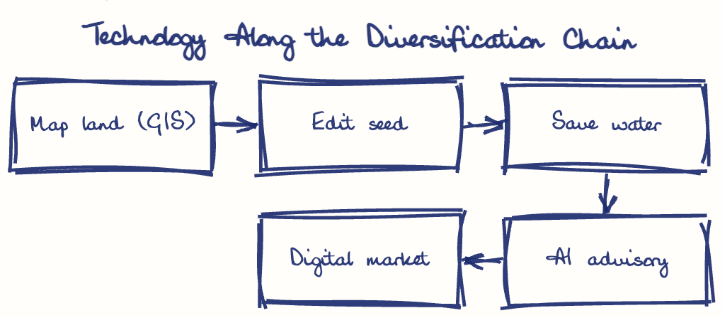
Crop diversification is held back by procurement-biased MSP, subsidies favouring water-hungry staples, small risk-averse rainfed holdings and weak storage and research. Emerging technologies such as GIS mapping, genome editing, micro-irrigation, AI advisory and e-NAM now supply the missing tools.
Model answer
Ghissu Editorial · Verified 4 Oct 2026 · 269 words
Skewed incentives
MSP covers 22 crops but assured procurement favours rice and wheat, while cheap urea and free power lower the cost of water-hungry paddy.
Risk, storage and research
Small holdings (86.1% in Agriculture Census 2015-16) and rainfed fields make farmers risk-averse, cold storage serves mostly potatoes, and agricultural R&D is only 0.26% of agricultural GDP (RIS, 2020-22).
Mapping and seeds
The CHAMAN project mapped land suited to horticulture, the Digital Agriculture Mission has surveyed 23.5 crore crop plots (PIB, 2026), and genome editing and the drought-tolerant chickpea SAATVIK make pulses viable on dry land.
Water, advice and markets
Drip irrigation under Per Drop More Crop and polyhouses grow high-value crops with little water, Kisan e-Mitra has answered over 93 lakh queries, and e-NAM opens buyers beyond the local mandi.
Align policy
Crop-neutral income support like Haryana's Mera Pani Meri Virasat, the pulses and oilseed missions, and the 10,000 FPO scheme can turn technology into adoption.
This model answer is indicative and the model can make mistakes; please verify key facts independently.
Practise this question
1Get the answer sheet
Sized for this question.
2Write your answer
Timed, by hand.
3Get it marked
Your score and what to fix.
This chapter in the exam
Major Crops and Cropping Patterns10 questions
Asked in 10 of 14 sittings since 2013
- 2026How Indian agriculture has been transformed from food scarcity to food surplus level? Explain the various government policies implemented for diversification of Indian agriculture. (Answer in 250 words)
- 2025Explain the factors influencing the decision of the farmers on the selection of high value crops in India.
All 10 questions, sorted by sub-topic, with model answers and practice.
Question from the official UPSC Civil Services (Main) Examination 2021 paper. Answer written by Ghissu's engine and checked against our editorial standards. Found an error? Tell us and we correct it within 48 hours.