2025 · GS Paper 3 · Q3 · 10 marks
Explain the factors influencing the decision of the farmers on the selection of high value crops in India.
In short
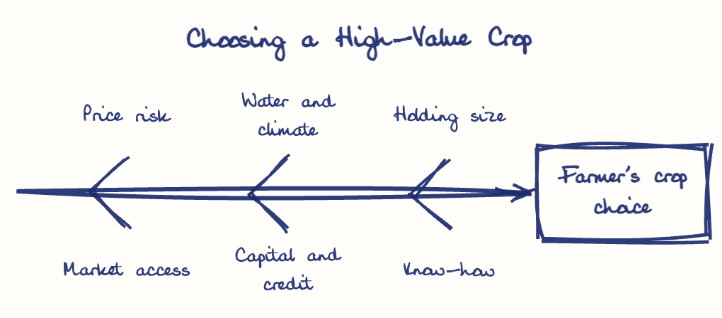
Farmers choose high-value crops by weighing price risk, market access, capital needs, water, climate, holding size, knowledge and policy signals, with MSP-backed cereals often winning on safety. FPOs such as Sahyadri Farms in Nashik show how pooled risk and markets enable the shift.
Model answer
Ghissu Editorial · Verified 4 Oct 2026 · 275 words
Price risk versus MSP
Open-ended procurement of rice and wheat in Punjab and Haryana contrasts with sharp swings in tomato and onion prices, so risk-averse farmers stay with cereals.
Market access
Cities, cold chains and buyers decide profit for perishables; Sahyadri Farms in Nashik lets small growers export grapes through an FPO.
Capital and contracts
Orchards and polyhouses need high capital and years of gestation, while buy-back contracts such as PepsiCo's potato deals in Punjab and PMFBY cover lower the risk.
Water and climate
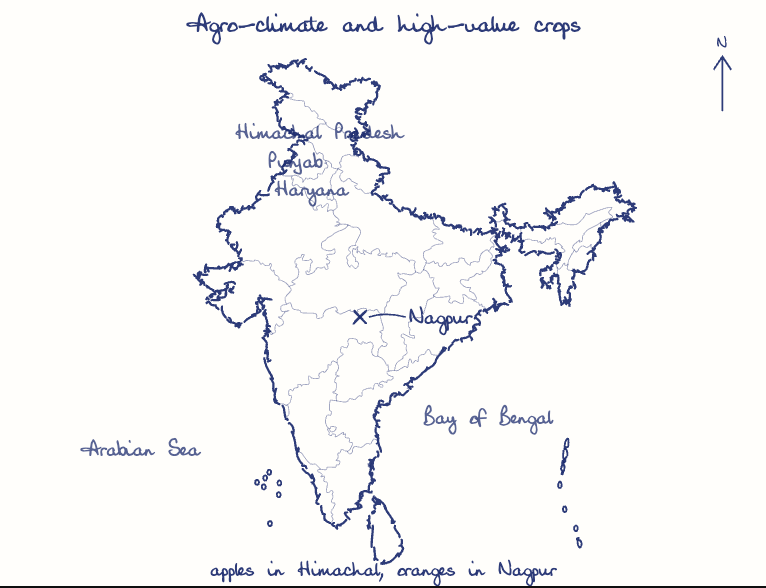
Assured or micro-irrigation and suitable climate decide the crop, as with apples in Himachal and oranges in Nagpur.
Holding size and labour
Small, fragmented holdings, the household's need to secure its own food and the availability of labour for labour-intensive crops make farmers cautious.
Knowledge and policy
KVK training, soil testing and quality planting material under the Clean Plant Programme help, while free power and fertiliser subsidies tilt choices towards water-intensive cereals.
This model answer is indicative and the model can make mistakes; please verify key facts independently.
Practise this question
1Get the answer sheet
Sized for this question.
2Write your answer
Timed, by hand.
3Get it marked
Your score and what to fix.
This chapter in the exam
Major Crops and Cropping Patterns10 questions
Asked in 10 of 14 sittings since 2013
- 2026How Indian agriculture has been transformed from food scarcity to food surplus level? Explain the various government policies implemented for diversification of Indian agriculture. (Answer in 250 words)
- 2023Explain the changes in cropping pattern in India in the context of changes in consumption pattern and marketing conditions.
All 10 questions, sorted by sub-topic, with model answers and practice.
Question from the official UPSC Civil Services (Main) Examination 2025 paper. Answer written by Ghissu's engine and checked against our editorial standards. Found an error? Tell us and we correct it within 48 hours.