2026 · GS Paper 3 · Q13 · 15 marks
How Indian agriculture has been transformed from food scarcity to food surplus level? Explain the various government policies implemented for diversification of Indian agriculture. (Answer in 250 words)
In short
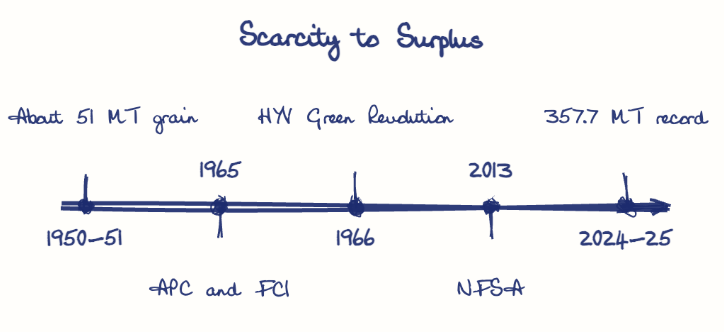
Indian agriculture moved from food scarcity to surplus through Green Revolution seeds, MSP-backed procurement and institutions, and diversification is now pursued through horticulture, pulses, oilseeds and millet missions and paddy-shift incentives. Foodgrain output hit a record 357.73 million tonnes in 2024-25.
Model answer
Ghissu Editorial · Verified 4 Oct 2026 · 283 words
Technology
High-yielding wheat and rice seeds, championed by M.S. Swaminathan with Norman Borlaug, plus fertiliser and assured irrigation, multiplied yields in Punjab, Haryana and western UP.
Price and procurement
The Agricultural Prices Commission and the Food Corporation of India (both 1965) gave MSP and assured procurement, so farmers invested in output.
Institutions
ICAR research, Krishi Vigyan Kendras, cooperative credit and later NFSA (2013) turned surplus into food security.
Horticulture and allied sectors
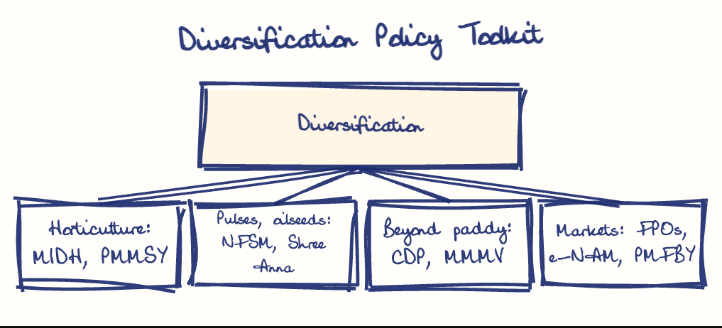
MIDH (2014-15), the National Dairy Plan and PMMSY (2020) lifted horticulture to 362 million tonnes in 2024-25 (PIB), above foodgrains.
Pulses, oilseeds and millets
NFSM, the Mission for Aatmanirbharta in Pulses (2025), the National Mission on Edible Oils (Oil Palm 2021, Oilseeds 2024) and the Shree Anna push of 2023 reward non-cereal crops.
Moving away from paddy
The Crop Diversification Programme under RKVY in the Green Revolution states and Haryana's Mera Pani Meri Virasat (2020) pay farmers to leave water-guzzling rice.
Markets and risk
FPOs, e-NAM and PMFBY reduce the market and weather risk of new crops.
This model answer is indicative and the model can make mistakes; please verify key facts independently.
Practise this question
1Get the answer sheet
Sized for this question.
2Write your answer
Timed, by hand.
3Get it marked
Your score and what to fix.
This chapter in the exam
Major Crops and Cropping Patterns10 questions
Asked in 10 of 14 sittings since 2013
- 2025Explain the factors influencing the decision of the farmers on the selection of high value crops in India.
- 2023Explain the changes in cropping pattern in India in the context of changes in consumption pattern and marketing conditions.
All 10 questions, sorted by sub-topic, with model answers and practice.
Question from the official UPSC Civil Services (Main) Examination 2026 paper. Answer written by Ghissu's engine and checked against our editorial standards. Found an error? Tell us and we correct it within 48 hours.