2022 · GS Paper 1 · Q15 · 15 marks
Describing the distribution of rubber producing countries, indicate the major environmental issues faced by them.
In short
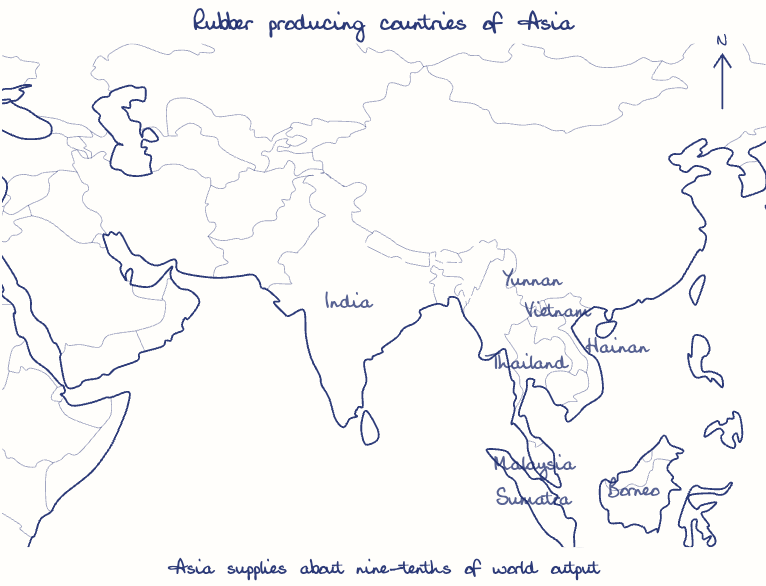
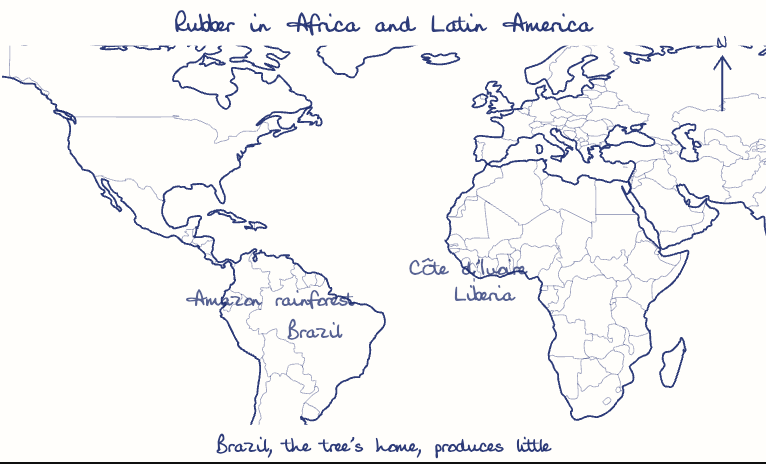
Natural rubber is grown mainly in the equatorial belt, led by Thailand and Indonesia, with Vietnam, Côte d'Ivoire, India and China as other major producers. Its main environmental cost is deforestation: a 2023 Nature study found rubber replaced over 4 million hectares of Southeast Asian forest since 1993.
Model answer
Ghissu Editorial · Verified 4 Oct 2026 · 285 words
Southeast Asian core
Thailand leads with roughly a third of world output, followed by Indonesia, while Malaysia has shifted estates to oil palm.
Mainland frontier
Vietnam, China's Hainan and Yunnan, and new plantations in Laos, Cambodia and Myanmar are the fastest-growing zone.
India and Africa
Kerala and Tripura lead India's output, Côte d'Ivoire is Africa's largest producer, and Brazil produces little because South American leaf blight ruined plantations such as Fordlândia.
Deforestation
A 2023 study in Nature found rubber replaced more than 4 million hectares of Southeast Asian forest since 1993.
Soil and water
Clean-weeded slopes in Xishuangbanna and Kerala lose topsoil, and dry-season water use shrinks streams.
Pollution
Acid-coagulated latex effluent fouls streams, and Kerala growers spray copper-based Bordeaux mixture.
Disease and climate
Pestalotiopsis leaf fall disease and El Niño droughts expose genetically narrow monocultures.
Traceable supply
Align with the EU Deforestation Regulation (2023) through smallholder traceability.
Agroforestry
Intercrop rubber with cocoa, coffee or pineapple, and treat factory effluent.
This model answer is indicative and the model can make mistakes; please verify key facts independently.
Practise this question
1Get the answer sheet
Sized for this question.
2Write your answer
Timed, by hand.
3Get it marked
Your score and what to fix.
This chapter in the exam
Resources and planning38 questions
Asked in 14 of 14 sittings since 2013
- 2026"Water resources are both an asset and a source of conflict in South Asia." Examine this statement giving examples.
- 2026Analyze the role of satellite-based technologies in achieving climate-smart agriculture and food security in India.
All 38 questions, sorted by sub-topic, with model answers and practice.
Question from the official UPSC Civil Services (Main) Examination 2022 paper. Answer written by Ghissu's engine and checked against our editorial standards. Found an error? Tell us and we correct it within 48 hours.