2022 · GS Paper 1 · Q13 · 15 marks
Discuss the significance of the lion and bull figures in Indian mythology, art and architecture.
In short
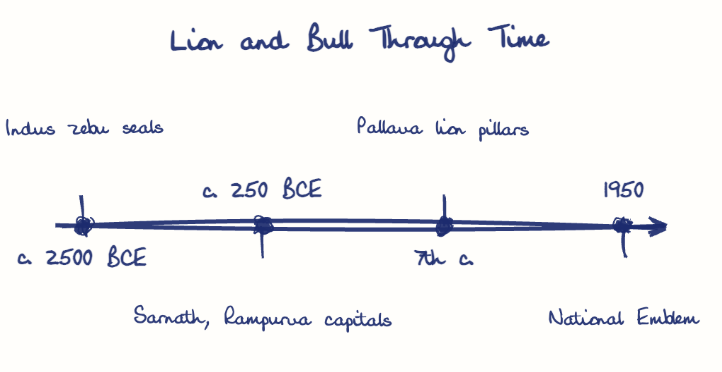
The lion stands for protecting power (Narasimha, Durga's mount, the Buddha as Shakyasimha) and the bull for dharma and fertility (Nandi, the Indus zebu), from Mauryan capitals to Dravida temples. Ashoka's Sarnath capital, with lions above a bull, became India's National Emblem in 1950.
Model answer
Ghissu Editorial · Verified 4 Oct 2026 · 318 words
Lion as righteous power
Narasimha destroys Hiranyakashipu and Durga rides a lion as Simhavahini, while the Buddha is Shakyasimha and the lion is Mahavira's emblem.
Bull as dharma
Nandi is Shiva's mount and ideal devotee, and the Bhagavata Purana shows Dharma as a bull losing a leg in each age.
Bull as plenty
The Indus zebu seals and Rishabhanatha's bull emblem tie it to strength, fertility and agrarian wealth.
Imperial sculpture
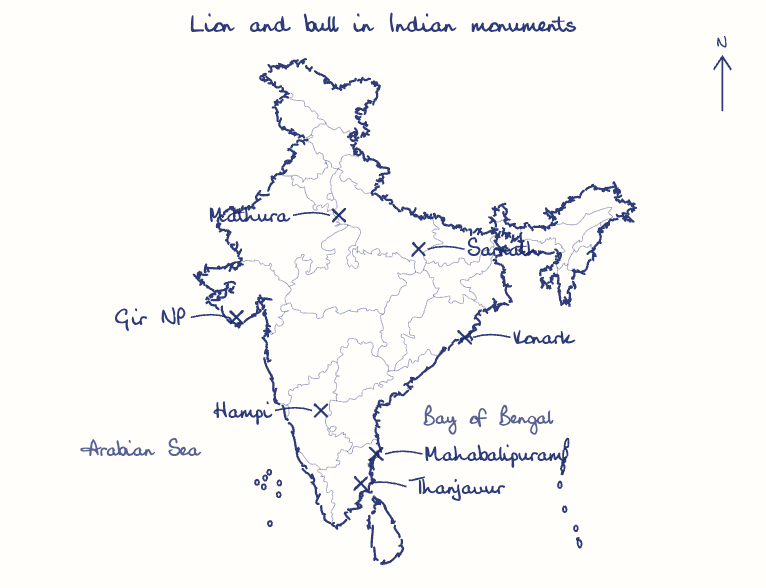
The Sarnath lions and the Rampurva bull capital, now at Rashtrapati Bhavan, mark the peak of Mauryan stone art.
Coins and icons
Wima Kadphises' gold coins show Shiva with his bull, and Mathura's Buddha sits on a lion throne.
Temple architecture
Pallava pillars at Mamallapuram rise from seated lions, Thanjavur's Brihadeeswara aligns a Nandi mandapa with the shrine, and Konark's gaja-simha guards the Sun temple.
Conserve and explain
Weathered Nandis and lion pillars need ASI conservation and on-site interpretation of their meaning.
Protect the animals
Project Lion (2020) and the Rashtriya Gokul Mission keep the symbols tied to living creatures.
This model answer is indicative and the model can make mistakes; please verify key facts independently.
Practise this question
1Get the answer sheet
Sized for this question.
2Write your answer
Timed, by hand.
3Get it marked
Your score and what to fix.
This chapter in the exam
Art Forms10 questions
Asked in 8 of 14 sittings since 2013
- 2025The sculptors filled the Chandella artform with resilient vigor and breadth of life.' Elucidate.
- 2022How will you explain that medieval Indian temple sculptures represent the social life of those days?
All 10 questions, sorted by sub-topic, with model answers and practice.
Question from the official UPSC Civil Services (Main) Examination 2022 paper. Answer written by Ghissu's engine and checked against our editorial standards. Found an error? Tell us and we correct it within 48 hours.