2023 · GS Paper 1 · Q3 · 10 marks
Bring out the socio-economic effects of the introduction of railways in different countries of the world.
In short
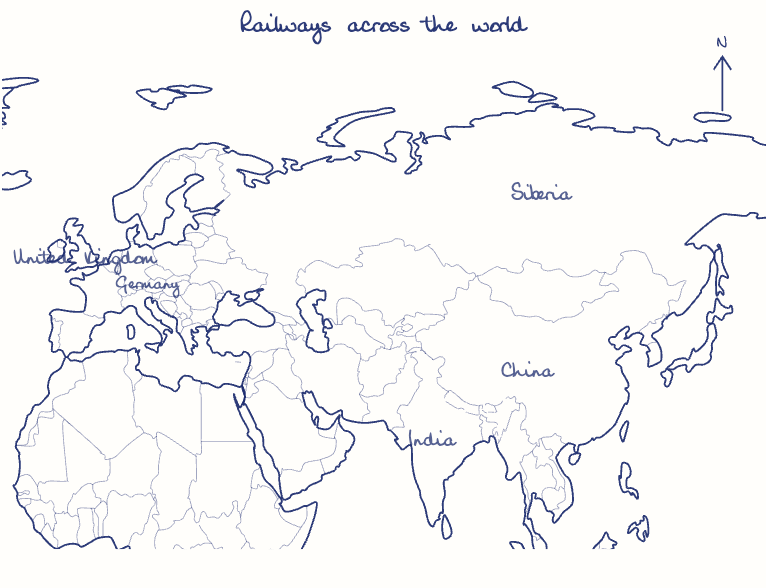
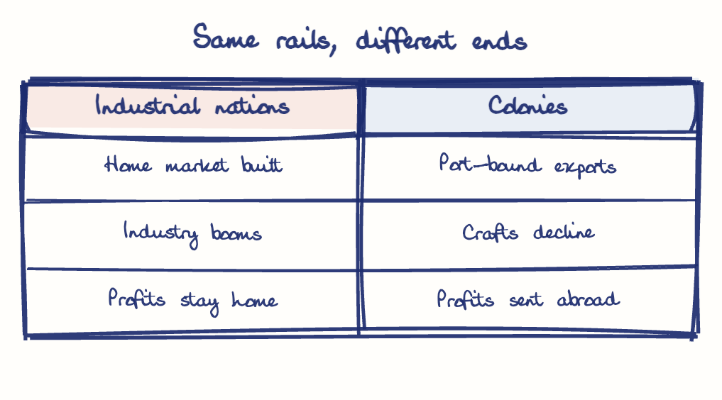
Railways built national markets and industry in Britain, the US, Germany and Russia, but in colonies such as India, Argentina and Africa they served export extraction. Socially they standardised time, moved settlers and labour, dispossessed Plains peoples and spread nationalism and protest.
Model answer
Ghissu Editorial · Verified 4 Oct 2026 · 289 words
Industrial take-off
Britain's railway mania of the 1840s fed coal, iron and engineering, and Rostow named railways the leading sector of take-off in the US, Germany and Russia.
National markets
The US transcontinental line (1869) linked the Pacific coast to the eastern network, and German railways deepened the Zollverein's unity before 1871.
Colonial extraction
Indian lines from 1853 earned British investors a guaranteed 5 per cent and favoured port traffic, draining raw cotton and hurting handicrafts, as R.C. Dutt documented.
Time and leisure
Britain adopted standard "railway time" from 1847, and cheap fares opened seaside holidays to workers.
Migration
The Trans-Siberian Railway (1891-1916) settled millions of peasants in Siberia, and the Uganda Railway brought Indian workers, some of whom settled and enlarged East Africa's Indian community.
Dispossession
In the American West, railways brought settlers and hunters who destroyed the bison herds and the Plains peoples' way of life.
Solidarities and protest
Indian trains mixed castes and spread nationalism, though Gandhi's Hind Swaraj (1909) blamed them for plague and famine; China's Railway Protection Movement (1911) helped topple the Qing.
This model answer is indicative and the model can make mistakes; please verify key facts independently.
Practise this question
1Get the answer sheet
Sized for this question.
2Write your answer
Timed, by hand.
3Get it marked
Your score and what to fix.
This chapter in the exam
Colonization2 questions
Asked in 2 of 14 sittings since 2013
Question from the official UPSC Civil Services (Main) Examination 2023 paper. Answer written by Ghissu's engine and checked against our editorial standards. Found an error? Tell us and we correct it within 48 hours.