2023 · GS Paper 2 · Q12 · 15 marks
Explain the constitutional perspectives of Gender Justice with the help of relevant Constitutional Provisions and case laws.
In short
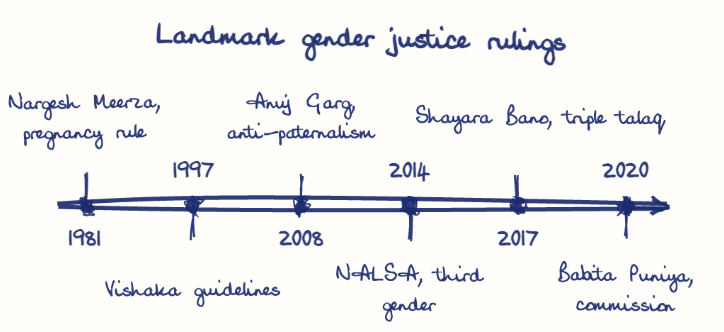
The Constitution secures gender justice through equality, dignity and representation, from Articles 14, 15(3) and 21 to the 106th Amendment's one-third legislative reservation. Courts have moved from protection to autonomy, as in Vishaka (1997), Anuj Garg (2008) and Joseph Shine (2018).
Model answer
Ghissu Editorial · Verified 4 Oct 2026 · 265 words
The 106th Amendment (2023), reserving one-third of legislative seats for women, shows the Constitution's view of gender justice as equality, dignity and a share of power under Articles 14, 15 and 21.
Constitutional Provisions for Gender Justice
1. Equality code: Articles 14, 15(1) and 16(2) bar sex discrimination, and Article 15(3) permits special provisions for women, embracing substantive equality. 2. Dignity and directives: Article 21 protects dignity and bodily autonomy, Articles 39(d) and 42 direct equal pay and maternity relief, and Article 51A(e) asks citizens to renounce practices derogatory to women. 3. Representation: Articles 243D and 243T reserve one-third of local body seats, and the 106th Amendment extends this to legislatures after delimitation.
Equality at work
Nargesh Meerza (1981) ended pregnancy-based dismissal, Vishaka (1997) led to the POSH Act 2013, and Babita Puniya (2020) opened permanent commission.
Against paternalism
Anuj Garg (2008) rejected stereotype-based protection, and Joseph Shine (2018) struck down adultery law treating wives as property.
Personal law and autonomy
Shayara Bano (2017) ended instant triple talaq, and X v Principal Secretary (2022) extended abortion access to unmarried women.
Implementation
Time-bound census and delimitation, functional POSH committees in every workplace, consultative personal law reform and judicial training using the Supreme Court's 2023 Handbook on gender stereotypes.
This model answer is indicative and the model can make mistakes; please verify key facts independently.
Practise this question
1Get the answer sheet
Sized for this question.
2Write your answer
Timed, by hand.
3Get it marked
Your score and what to fix.
This chapter in the exam
Women6 questions
Asked in 6 of 14 sittings since 2013
- 2026“Women as a class neither belong to a minority group nor are they regarded as forming a backward class.” In the light of this statement, discuss the evolution of women’s reservation from local bodies to Parliament.
- 2025Women's social capital complements in advancing empowerment and gender equity. Explain.
All 6 questions, sorted by sub-topic, with model answers and practice.
Question from the official UPSC Civil Services (Main) Examination 2023 paper. Answer written by Ghissu's engine and checked against our editorial standards. Found an error? Tell us and we correct it within 48 hours.