2024 · GS Paper 1 · Q14 · 15 marks
The groundwater potential of the gangetic valley is on a serious decline. How may it affect the food security of India?
In short
Declining groundwater in the Gangetic valley threatens India's food security by cutting irrigated wheat and rice output, removing the drought buffer and raising costs and contamination. The CGWB's 2025 assessment lists 730 over-exploited units, clustered in the north-western plain that supplies the central pool.
Model answer
Ghissu Editorial · Verified 4 Oct 2026 · 296 words
Rabi output at risk
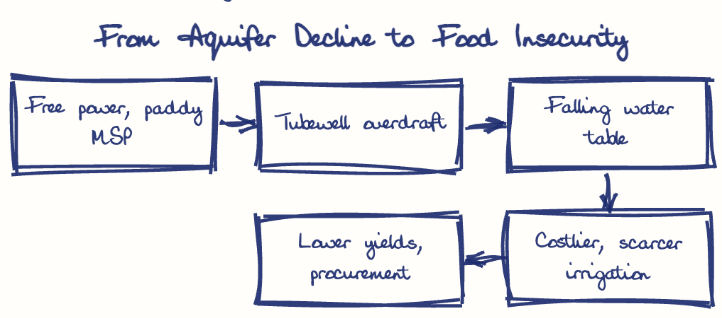
Groundwater serves over 60% of India's irrigated area, and wheat in the plains is mostly tubewell-irrigated, so falling tables cut grain output.
Central pool dependence
The north-western plain supplies much of the grain that feeds about 81 crore people under the National Food Security Act, 2013.
Lost drought buffer
Pumped water saved kharif paddy in the drought years 2009 and 2014; a depleted aquifer turns every monsoon failure into a harvest shock.
Rising farm costs
Deeper pumps and failed borewells push small farmers into debt and weaken their own food access.
Contaminated food chain
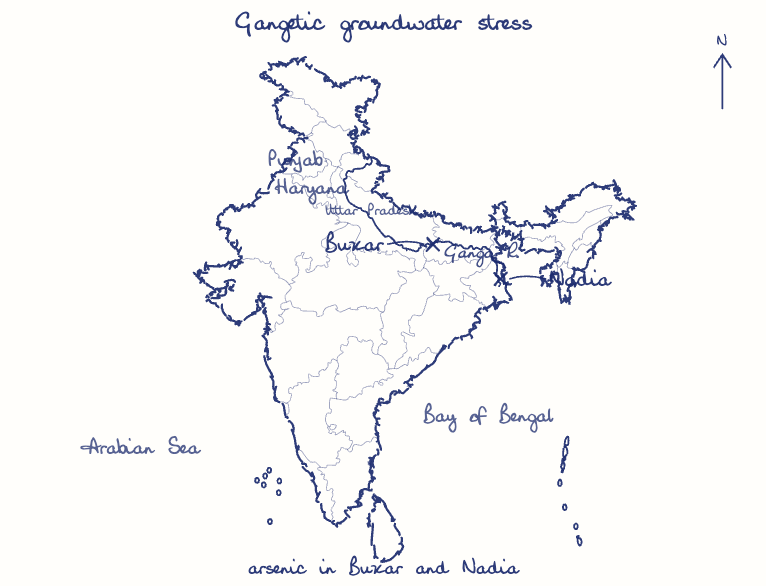
Arsenic drawn into irrigation water in Bhojpur and Buxar (Bihar) and Nadia (West Bengal) accumulates in rice.
Fiscal strain
Free farm power in Punjab subsidises pumping that lifts less water each year.
Diversify crops
Move paddy area to maize, pulses and millets, and expand rice in water-rich eastern India.
Save and recharge
Direct seeded rice, PMKSY micro-irrigation, Punjab's Subsoil Water Act, 2009, and Atal Bhujal Yojana's village water budgets.
This model answer is indicative and the model can make mistakes; please verify key facts independently.
Practise this question
1Get the answer sheet
Sized for this question.
2Write your answer
Timed, by hand.
3Get it marked
Your score and what to fix.
This chapter in the exam
Resources and planning38 questions
Asked in 14 of 14 sittings since 2013
- 2026"Water resources are both an asset and a source of conflict in South Asia." Examine this statement giving examples.
- 2026Analyze the role of satellite-based technologies in achieving climate-smart agriculture and food security in India.
All 38 questions, sorted by sub-topic, with model answers and practice.
Question from the official UPSC Civil Services (Main) Examination 2024 paper. Answer written by Ghissu's engine and checked against our editorial standards. Found an error? Tell us and we correct it within 48 hours.