2024 · GS Paper 1 · Q1 · 10 marks
Underline the changes in the field of society and economy from the Rig Vedic to the later Vedic period.
In short
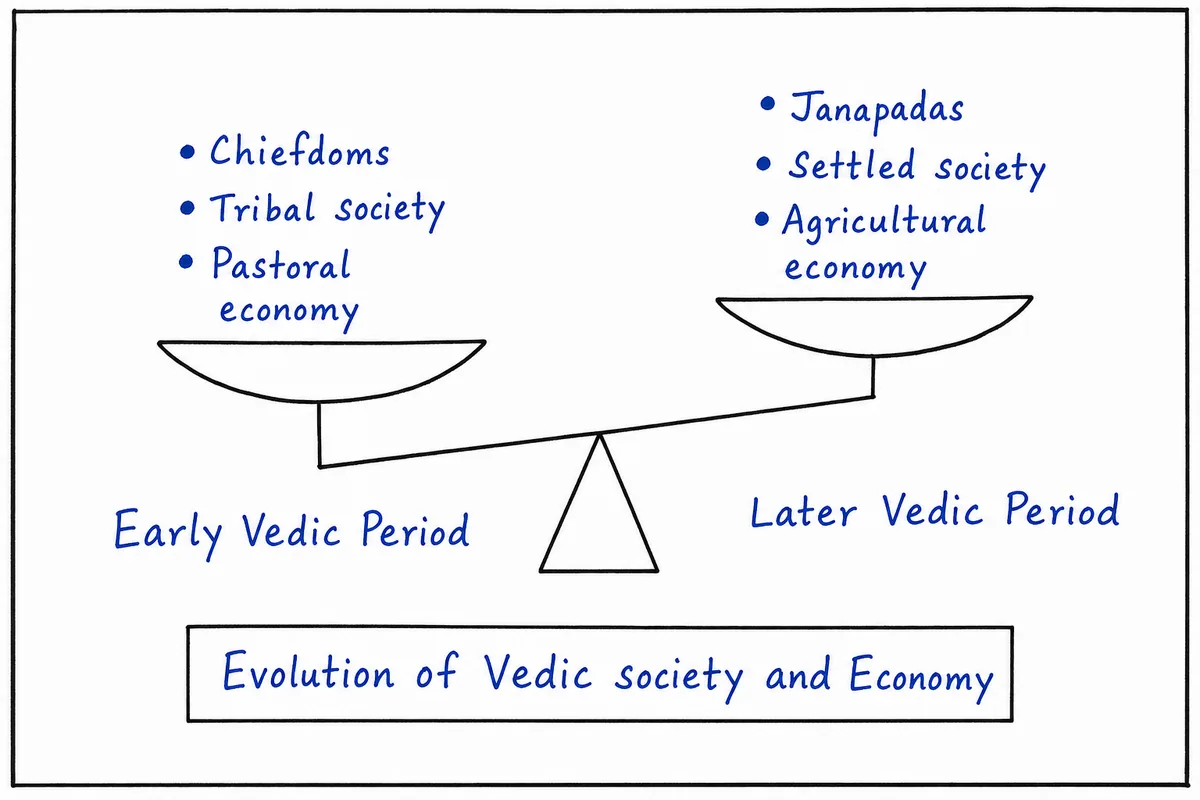
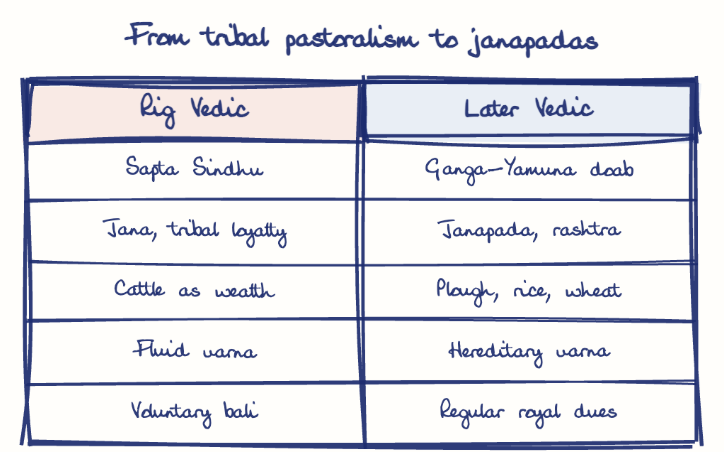
From the Rig Vedic to the Later Vedic period, society moved from fluid, kin-based tribes to territorial kingdoms with hereditary varna and lower status for women. The economy shifted from cattle-keeping to iron-aided plough agriculture in the Ganga-Yamuna doab, with voluntary bali becoming regular taxes.
Model answer
Ghissu Editorial · Verified 4 Oct 2026 · 265 words
Tribe to territory
Loyalty to the jana gave way to the janapada, as Kuru-Panchala kingdoms rose and the sabha and samiti weakened.
Varna hardens
The fluid occupational varna, named only in the late Purusha Sukta, became hereditary, with Brahmanas and Kshatriyas on top and Shudras reduced to service.
Gotra and women
Gotra exogamy took root, while women like Apala and Ghosha, who composed hymns, gave way to women barred from the sabha, though Gargi's debate in the Brihadaranyaka Upanishad shows exceptions.
Pastoral to agrarian
Cattle wealth and gavishti (war for cows) yielded to plough agriculture, with rice and wheat in the Shatapatha Brahmana.
Iron and crafts
Iron (shyama ayas), found at Painted Grey Ware sites, cleared the doab's forests, and smiths, carpenters, potters and weavers specialised, with the nishka as a measure of value.
Gifts to taxes
The voluntary bali became regular dues collected by officials like the sangrihitri and bhagadugha.
This model answer is indicative and the model can make mistakes; please verify key facts independently.
Practise this question
1Get the answer sheet
Sized for this question.
2Write your answer
Timed, by hand.
3Get it marked
Your score and what to fix.
This chapter in the exam
Indian Culture - Ancient Times8 questions
Asked in 6 of 14 sittings since 2013
- 2026Analyze the importance of Ashokan inscriptions for reconstructing Mauryan history.
- 2023What are the main features of Vedic society and religion? Do you think some of the features are still prevailing in Indian society?
All 8 questions, sorted by sub-topic, with model answers and practice.
Question from the official UPSC Civil Services (Main) Examination 2024 paper. Answer written by Ghissu's engine and checked against our editorial standards. Found an error? Tell us and we correct it within 48 hours.