2023 · GS Paper 1 · Q11 · 15 marks
What are the main features of Vedic society and religion? Do you think some of the features are still prevailing in Indian society?
In short
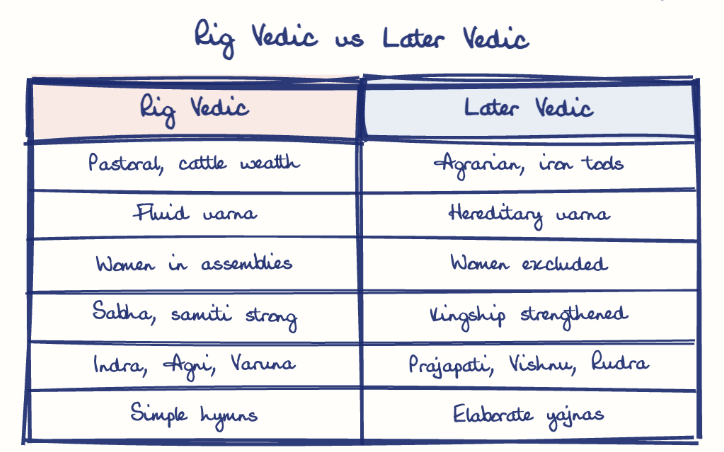
Vedic society moved from pastoral, kin-based tribes with fluid varna and nature worship to agrarian communities with hereditary varna, elaborate yajnas and Upanishadic philosophy. Many features persist in transformed form, such as saptapadi, recognised by the Hindu Marriage Act, 1955, alongside caste endogamy and patriarchy.
Model answer
Ghissu Editorial · Verified 4 Oct 2026 · 310 words
Kinship and varna
Society rested on the patriarchal kula, vish and jana; the Purusha Sukta first names four varnas, which became hereditary in the Later Vedic period.
Nature worship to philosophy
Indra, Agni and Varuna, guardian of rita, were worshipped without temples, and elaborate yajnas later provoked the Upanishads' ideas of atman, karma and rebirth.
Rites and recitation
Samskaras like upanayana and saptapadi persist, the latter recognised by the Hindu Marriage Act, 1955, and UNESCO inscribed Vedic Chanting in 2008.
Hierarchy and patriarchy
Caste endogamy and gotra rules still govern most marriages, as khap panchayat diktats show, despite Article 17 abolishing untouchability.
Transformed pluralism
The Rig Vedic "Ekam sat vipra bahudha vadanti" underpins Indian pluralism, and Surya is still worshipped in Chhath, though Puranic deities have replaced most Vedic gods.
Constitutional filter
Keep Vedic inquiry and pluralism while rejecting birth-based hierarchy under Articles 15 and 17.
Preserve knowledge
Use the AICTE Indian Knowledge Systems division (2020) to document Vedic texts and recitation lineages.
This model answer is indicative and the model can make mistakes; please verify key facts independently.
Practise this question
1Get the answer sheet
Sized for this question.
2Write your answer
Timed, by hand.
3Get it marked
Your score and what to fix.
This chapter in the exam
Indian Culture - Ancient Times8 questions
Asked in 6 of 14 sittings since 2013
- 2026Analyze the importance of Ashokan inscriptions for reconstructing Mauryan history.
- 2024Underline the changes in the field of society and economy from the Rig Vedic to the later Vedic period.
All 8 questions, sorted by sub-topic, with model answers and practice.
Question from the official UPSC Civil Services (Main) Examination 2023 paper. Answer written by Ghissu's engine and checked against our editorial standards. Found an error? Tell us and we correct it within 48 hours.