2024 · GS Paper 2 · Q18 · 15 marks
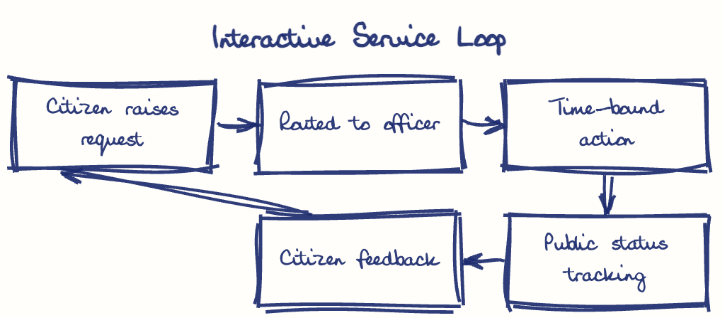
e-governance is not just about the routine application of digital technology in service delivery process. It is as much about multifarious interactions for ensuring transparency and accountability. In this context evaluate the role of the Interactive Service Model of e-governance.
In short
The Interactive Service Model advances transparency and accountability by making e-governance a two-way loop in which citizens raise requests, track action and rate officials. CPGRAMS, Rajasthan's Jan Soochna Portal and Odisha's Mo Sarkar prove its role, though access gaps and tokenistic consultation keep it partial.
Model answer
Ghissu Editorial · Verified 4 Oct 2026 · 279 words
Grievance redress
CPGRAMS lets citizens lodge, track and rate complaints against any central ministry, fixing responsibility on a named officer.
Proactive disclosure
Rajasthan's Jan Soochna Portal (2019) publishes beneficiary data under Section 4 of the RTI Act so villagers can verify their own entitlements.
Feedback on officials
Odisha's Mo Sarkar (2019) collects citizen ratings of police and hospital staff, and cVIGIL (2018) tracks poll-code complaints to closure.
Participation
MyGov (2014) crowdsources ideas, opening policy choices to public view.
Disposal without resolution
Template replies close many grievances, which forced CPGRAMS to add citizen feedback and appeals.
Access gap
Women are 30% less likely than men to use mobile internet (GSMA, 2024).
Tokenistic consultation
The Pre-Legislative Consultation Policy (2014) is not binding, and the 2020 farm laws began as ordinances with no public draft.
Closure on satisfaction
Treat grievances as resolved only after citizen confirmation, as Sevottam implies.
Assisted access
Use Common Service Centres and Bhashini for vernacular, voice-based interaction.
This model answer is indicative and the model can make mistakes; please verify key facts independently.
Practise this question
1Get the answer sheet
Sized for this question.
2Write your answer
Timed, by hand.
3Get it marked
Your score and what to fix.
This chapter in the exam
e-Governance — Applications, Models, Successes, Limitations and Potential6 questions
Asked in 6 of 14 sittings since 2013
- 2025e-governance projects have a built-in bias towards technology and back-end integration than user-centric designs. Examine.
- 2023e-governance, as a critical tool of governance, has ushered in effectiveness, transparency and accountability in governments. What inadequacies hamper the enhancement of these features?
All 6 questions, sorted by sub-topic, with model answers and practice.
Question from the official UPSC Civil Services (Main) Examination 2024 paper. Answer written by Ghissu's engine and checked against our editorial standards. Found an error? Tell us and we correct it within 48 hours.