2024 · GS Paper 3 · Q2 · 10 marks
What are the causes of persistent high food inflation in India? Comment on the effectiveness of the monetary policy of the RBI to control this type of inflation.
In short
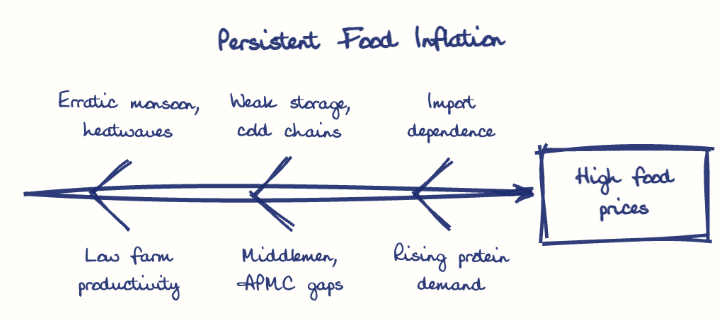
Persistent food inflation in India stems from climate shocks, rainfed farming, weak cold chains, intermediaries, import dependence and shifting diets, which monetary policy cannot fix directly. A 250 basis point repo hike to 6.5% did not stop food inflation rising to 7.5% in FY24, though policy anchors expectations.
Model answer
Ghissu Editorial · Verified 4 Oct 2026 · 280 words
Climate Shocks
With about half the sown area rainfed, the weak 2023 monsoon and 2024 heatwaves hit vegetables and pulses.
Perishable Supply Chains
Thin cold storage and many intermediaries make tomato, onion and potato prices spike.
Demand and Imports
Rising incomes shift demand to milk, pulses and fruit faster than supply grows, while heavy edible oil imports pass on global prices.
Limited Direct Effect
A 250 basis point repo hike to 6.5% by February 2023 did not stop food inflation rising in FY24, since rates cannot fix supply.
Anchoring Expectations
Policy curbs second-round effects on wages and expectations; average inflation fell from 6.8% to 4.9% under inflation targeting.
Growth Cost
High rates against a supply shock slow credit, which is why the Economic Survey 2023-24 suggested targeting inflation excluding food.
Supply Tools
Buffer stocks of onion and pulses under the Price Stabilisation Fund, open market sales of wheat and curbs on rice and wheat exports gave quicker relief.
This model answer is indicative and the model can make mistakes; please verify key facts independently.
Practise this question
1Get the answer sheet
Sized for this question.
2Write your answer
Timed, by hand.
3Get it marked
Your score and what to fix.
This chapter in the exam
Growth8 questions
Asked in 6 of 14 sittings since 2013
- 2024Discuss the merits and demerits of the four 'Labour Codes' in the context of labour market reforms in India. What has been the progress so far in this regard?
- 2022"Economic growth in the recent past has been led by increase in labour productivity." Explain this statement. Suggest the growth pattern that will lead to creation of more jobs without compromising labour productivity.
All 8 questions, sorted by sub-topic, with model answers and practice.
Question from the official UPSC Civil Services (Main) Examination 2024 paper. Answer written by Ghissu's engine and checked against our editorial standards. Found an error? Tell us and we correct it within 48 hours.