2024 · GS Paper 4 · Q5(b) · 10 marks
The soul of the new law, Bharatiya Nyaya Sanhita (BNS) is Justice, Equality and Impartiality based on Indian culture and ethos. Discuss this in the light of major shift from a doctrine of punishment to justice in the present judicial system.
In short
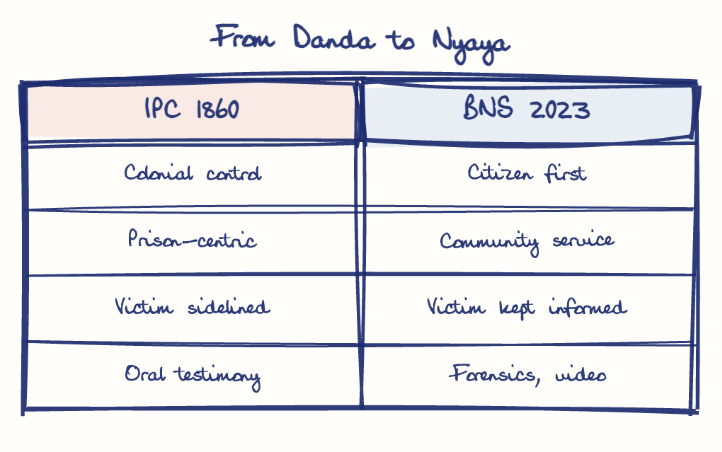
The Bharatiya Nyaya Sanhita moves criminal law from colonial punishment towards justice through community service, victim rights, transgender inclusion and forensic proof. Its soul is real but untested, since sedition-like Section 152, the death penalty and capacity gaps persist.
Model answer
Ghissu Editorial · Verified 4 Oct 2026 · 286 words
Reformative justice
Community service is now a punishment for six petty offences such as first-time theft below Rs 5,000 with restitution, reflecting the idea that danda restores dharma.
Victim at the centre
The Bharatiya Nagarik Suraksha Sanhita allows a Zero FIR anywhere and updates for victims within 90 days; nearly 60,000 Zero FIRs were filed in two years (New India Samachar, July 2026).
Equality and impartiality
Gender now includes transgender persons, mob lynching is a distinct offence under Section 103(2), and mandatory forensics and videography curb police bias.
Old powers, new names
Section 152 is criticised as sedition relabelled, and police custody of 15 days can be split across the first 40 or 60 days.
Retributive core intact
The death penalty is retained and extended, and omitting Section 377 altogether left adult male victims of rape without a specific remedy.
Capacity deficit
Forensic mandates need laboratories, staff and judges, or timelines remain paper promises.
This model answer is indicative and the model can make mistakes; please verify key facts independently.
Practise this question
1Get the answer sheet
Sized for this question.
2Write your answer
Timed, by hand.
3Get it marked
Your score and what to fix.
This chapter in the exam
Laws, rules, regulations and conscience as sources of ethical guidance16 questions
Asked in 9 of 14 sittings since 2013
- 2026Dr. B. R. Ambedkar had cautioned that employing civil disobedience within a constitutional democracy equates to endorsing 'anarchy'. How should modern democracies navigate the ethical dilemmas posed by civil disobedience movements that aim to promote social justice against policies that may raise genuine concerns?
- 2026Usually schools, working in remote areas, do not fully comply with government regulations. However, if the rules are enforced strictly, it would lead to most schools closing down. How should an administrator strike a balance between enforcement of rules and educational rights of children?
All 16 questions, sorted by sub-topic, with model answers and practice.
Question from the official UPSC Civil Services (Main) Examination 2024 paper. Answer written by Ghissu's engine and checked against our editorial standards. Found an error? Tell us and we correct it within 48 hours.