2025 · GS Paper 1 · Q5 · 10 marks
What are non-farm primary activities? How are these activities related to physiographic features in India? Discuss with suitable examples.
In short
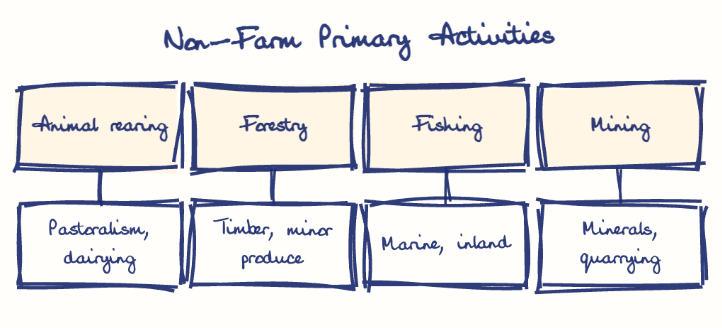
Non-farm primary activities such as animal rearing, forestry, fishing and mining extract resources directly from nature, and their location in India follows physiography. Himalayan meadows support transhumance, the Chota Nagpur plateau's ancient rocks support mining, the Thar supports herding and the coasts support fishing.
Model answer
Ghissu Editorial · Verified 4 Oct 2026 · 275 words
Livelihood scale
These activities sustain millions of landless, tribal and coastal households, and India ranks among the world's largest producers of milk and fish.
Resource-led location
Unlike cultivation, which needs level fertile land, each activity follows a specific natural endowment of slope, rock, rainfall or sea.
Himalayan mountains
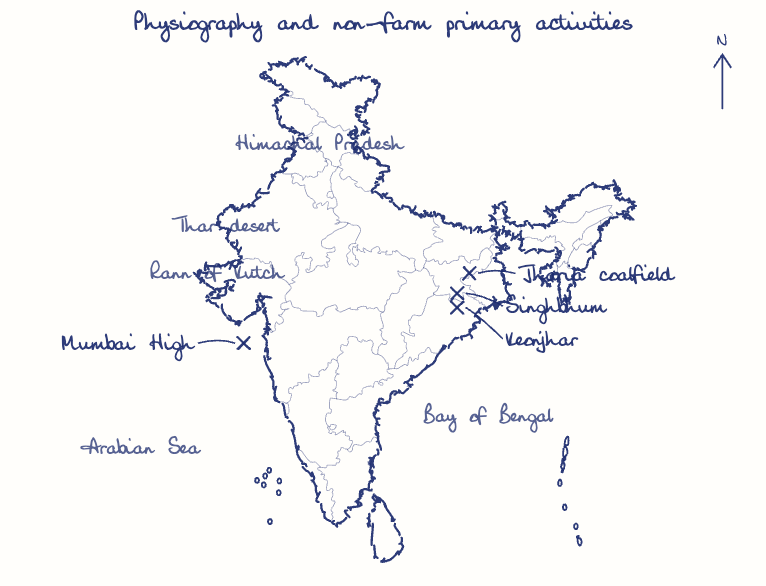
Alpine meadows favour transhumance, as Gaddis in Himachal Pradesh and Gujjar-Bakarwals in Jammu and Kashmir move flocks seasonally; forests yield timber and medicinal herbs.
Peninsular plateau
Ancient Dharwar and Gondwana rocks make Chota Nagpur the mineral heartland, with coal at Jharia and iron ore at Singhbhum, while forests give tendu leaves and mahua to tribal gatherers.
Arid west and Aravallis
Scant rain makes camel and sheep herding by Raikas the Thar's mainstay, the Aravallis yield Makrana marble, and the Rann of Kutch supports salt pans worked by Agariyas.
Coasts, rivers and islands
The continental shelf supports marine fishing in Kerala and offshore oil at Mumbai High, Chavara's beach sands yield monazite, and the beels of the plains sustain inland fisheries.
This model answer is indicative and the model can make mistakes; please verify key facts independently.
Practise this question
1Get the answer sheet
Sized for this question.
2Write your answer
Timed, by hand.
3Get it marked
Your score and what to fix.
This chapter in the exam
Resources and planning38 questions
Asked in 14 of 14 sittings since 2013
- 2026"Water resources are both an asset and a source of conflict in South Asia." Examine this statement giving examples.
- 2026Analyze the role of satellite-based technologies in achieving climate-smart agriculture and food security in India.
All 38 questions, sorted by sub-topic, with model answers and practice.
Question from the official UPSC Civil Services (Main) Examination 2025 paper. Answer written by Ghissu's engine and checked against our editorial standards. Found an error? Tell us and we correct it within 48 hours.