2026 · GS Paper 1 · Q17 · 15 marks
Analyze the major drivers of human-induced land-use changes in India and their geographical consequences.
In short
Population pressure, agricultural intensification, urban sprawl, infrastructure, mining and plantation economics drive land-use change in India, causing floods, landslides, degradation and habitat loss. ISRO's atlas (2021) found about 29.7% of India's land degraded in 2018-19.
Model answer
Ghissu Editorial · Verified 4 Oct 2026 · 268 words
Agricultural intensification
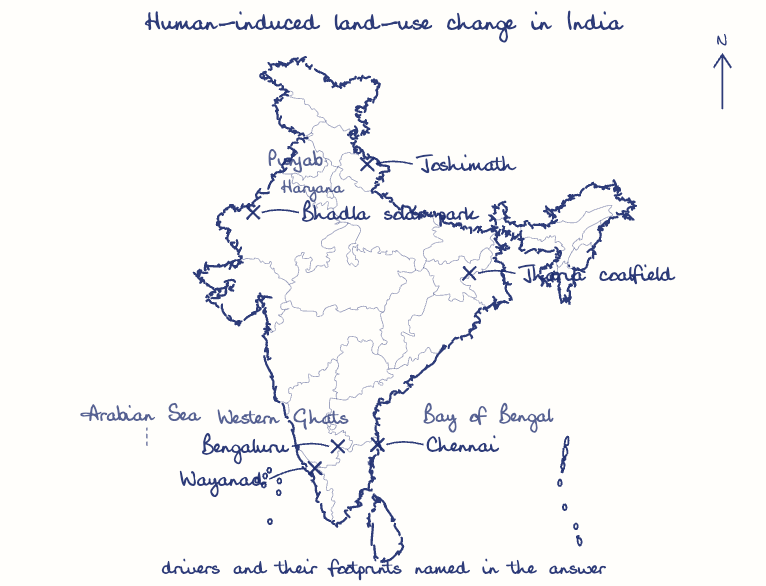
Population pressure pushed cultivation onto forest margins, and coastal Andhra Pradesh turned paddy fields into aquaculture ponds.
Urban sprawl
Land under non-agricultural uses has nearly tripled since 1950-51, eating fertile peri-urban farmland.
Infrastructure and mining
Expressways, coal mining in Jharia and Hasdeo Arand, and solar parks such as Bhadla claim forests and topsoil.
Policy and markets
Oil palm (NMEO-OP, 2021) and rubber plantations replace natural forest with monocultures.
Hydrological disruption
Encroached lakes and paved catchments produced urban floods in Chennai (2015) and Bengaluru (2022).
Slope instability
Unplanned construction amplified the Joshimath subsidence (2023) and the Wayanad landslides (2024).
Habitat fragmentation
Cultivation, roads and mines cut elephant corridors, fuelling human-elephant conflict in Odisha, Jharkhand and Assam.
Human costs
Loss of prime farmland strains food security, and mining displaces tribal communities in Central India.
Zoning and restoration
Map and protect prime farmland, wetlands and slopes, and restore 26 million hectares of degraded land by 2030.
This model answer is indicative and the model can make mistakes; please verify key facts independently.
Practise this question
1Get the answer sheet
Sized for this question.
2Write your answer
Timed, by hand.
3Get it marked
Your score and what to fix.
This chapter in the exam
Resources and planning38 questions
Asked in 14 of 14 sittings since 2013
- 2026"Water resources are both an asset and a source of conflict in South Asia." Examine this statement giving examples.
- 2026Analyze the role of satellite-based technologies in achieving climate-smart agriculture and food security in India.
All 38 questions, sorted by sub-topic, with model answers and practice.
Question from the official UPSC Civil Services (Main) Examination 2026 paper. Answer written by Ghissu's engine and checked against our editorial standards. Found an error? Tell us and we correct it within 48 hours.