2026 · GS Paper 1 · Q12 · 15 marks
Linguistic reorganization of Indian States was driven by popular pressure from below. Comment.
In short
Linguistic reorganisation was largely forced by popular agitation, but the idea originated with the Congress elite and the state controlled its timing and limits. Potti Sriramulu's fatal 1952 fast produced Andhra State in 1953, while the Fazl Ali Commission screened demands through administrative tests.
Model answer
Ghissu Editorial · Verified 4 Oct 2026 · 274 words
Andhra's martyrdom
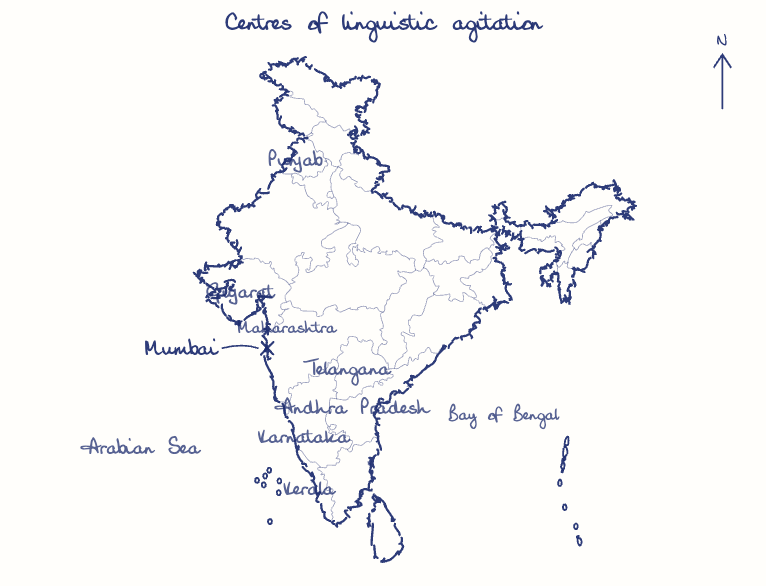
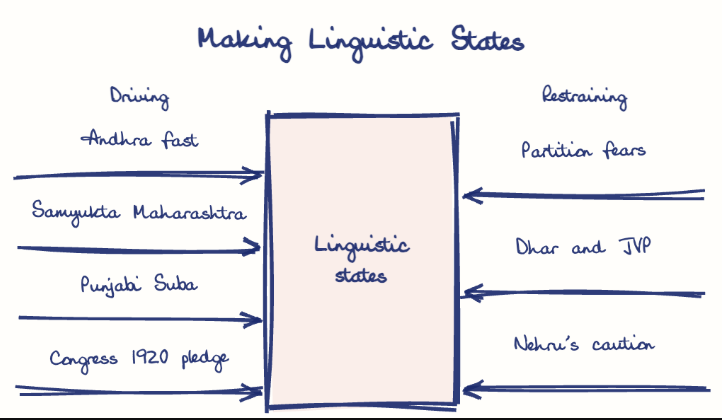
Potti Sriramulu's death in December 1952 after a 58-day fast triggered riots, and Andhra State followed on 1 October 1953.
Samyukta Maharashtra
Mass protest, including deadly police firing in Bombay in 1956, broke the bilingual Bombay State into Maharashtra and Gujarat in 1960.
Punjabi Suba
The Akali Dal's campaign under Master Tara Singh and Sant Fateh Singh won Punjab's reorganisation in 1966.
Elite-born idea
The 1920 Nagpur Congress and the 1928 Nehru Report endorsed linguistic provinces long before mass mobilisation.
State control of timing
The Dhar Commission (1948) and JVP Committee (1949) delayed the demand, and the Fazl Ali Commission treated language as a major but not sole criterion.
Unequal success
Telangana was merged into Andhra Pradesh in 1956, and its 1969 agitation won only safeguards, showing that pressure succeeded only where it fitted the centre's calculus.
Lessons for new demands
A Second States Reorganisation Commission should weigh popular will with viability, so violence is not the price of a hearing.
This model answer is indicative and the model can make mistakes; please verify key facts independently.
Practise this question
1Get the answer sheet
Sized for this question.
2Write your answer
Timed, by hand.
3Get it marked
Your score and what to fix.
This chapter in the exam
Reorganization of States (the "Linguistic" Phase)3 questions
Asked in 3 of 14 sittings since 2013
Question from the official UPSC Civil Services (Main) Examination 2026 paper. Answer written by Ghissu's engine and checked against our editorial standards. Found an error? Tell us and we correct it within 48 hours.