2026 · GS Paper 2 · Q8 · 10 marks
Analyse the advantages and limitations of the generalist structure of the Indian Civil Services in contemporary governance.
In short
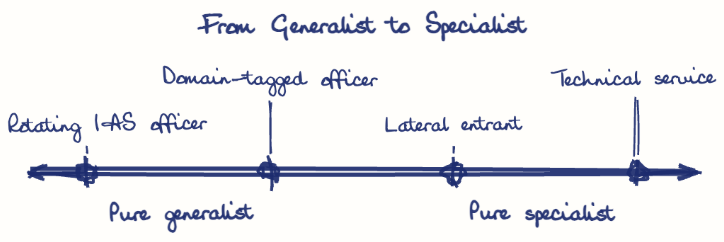
The generalist civil service excels at coordination, crisis response and neutral arbitration, but short tenures and thin domain depth weaken it in technical policy. Odisha's Cyclone Fani evacuation of over a million people in 2019 shows its strength, while the lateral-entry debate since 2019 shows its limits.
Model answer
Ghissu Editorial · Verified 4 Oct 2026 · 270 words
Integrated view
A district collector coordinates police, health, revenue and welfare at once, as district control rooms showed during COVID-19.
Crisis management
Generalists led Odisha's evacuation of over a million people before Cyclone Fani in 2019, earning UN praise.
Neutral arbiter
Free of any professional lobby, they can weigh competing advice from engineers, economists and doctors and turn it into feasible policy.
National integration
Rotation across states and sectors builds an all-India outlook that holds a federal system together.
Cult of the amateur
The Fulton Committee's (1968) charge bites harder today, when policy needs real depth in AI regulation, semiconductors or climate finance.
Short tenures
Frequent transfers block expertise and ownership of outcomes, which is why T.S.R. Subramanian (2013) sought minimum tenures and Civil Services Boards.
Specialist alienation
Generalist dominance of senior posts demoralises engineers, scientists and other technical services.
This model answer is indicative and the model can make mistakes; please verify key facts independently.
Practise this question
1Get the answer sheet
Sized for this question.
2Write your answer
Timed, by hand.
3Get it marked
Your score and what to fix.
This chapter in the exam
Role of Civil Services in a Democracy6 questions
Asked in 6 of 14 sittings since 2013
- 2024The Doctrine of Democratic Governance makes it necessary that the public perception of the integrity and commitment of civil servants becomes absolutely positive. Discuss.
- 2020Institutional quality is a crucial driver of economic performance. In this context suggest reforms in Civil Service for strengthening democracy.
All 6 questions, sorted by sub-topic, with model answers and practice.
Question from the official UPSC Civil Services (Main) Examination 2026 paper. Answer written by Ghissu's engine and checked against our editorial standards. Found an error? Tell us and we correct it within 48 hours.