2026 · GS Paper 2 · Q16 · 15 marks
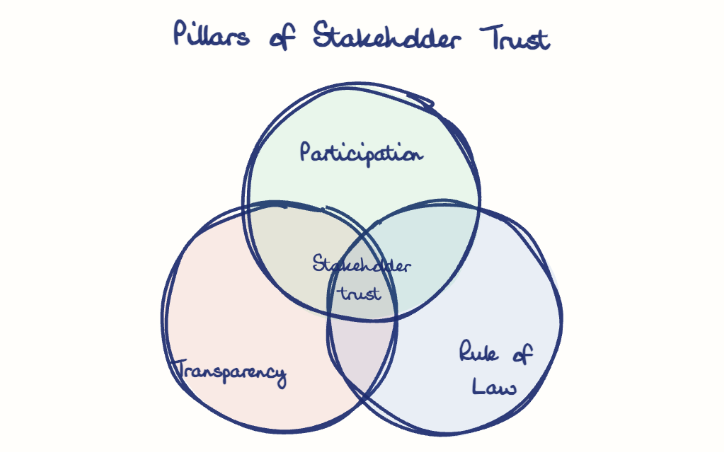
“Transparency and accountability in governance are not about controlling corruption but about creating the trust of stakeholders in the policy process by following the Rule of Law and Participatory Governance.” Comment.
In short
Transparency and accountability do curb corruption, but their deeper purpose is to build stakeholder trust through lawful procedure and citizen participation. In ADR v. Union of India (2024), the Supreme Court struck down electoral bonds to protect voters' right to know who funds parties.
Model answer
Ghissu Editorial · Verified 4 Oct 2026 · 271 words
Corruption control still matters
Direct Benefit Transfer has removed fake beneficiaries and the Lokpal Act 2013 creates a watchdog, so the statement understates this role.
Trust is the larger goal
The Second ARC called RTI the "master key to good governance" because citizens accept hard decisions they can see being made.
Clean but opaque still fails
Limited disclosure on the Great Nicobar project has dented confidence even without graft.
Predictable rules
Fair procedure under Article 21, as Maneka Gandhi (1978) required, assures stakeholders that power follows law.
Open law-making
The Pre-Legislative Consultation Policy of 2014 invites public comment on draft laws.
Citizens as auditors
MGNREGA social audits and Meghalaya's Social Audit Act of 2017, the first such state law, let communities verify spending themselves.
Strengthen RTI
Fill commission vacancies, as Anjali Bhardwaj (2019) directed, and protect whistle-blowers.
Binding consultation
Give pre-legislative consultation and social audits statutory backing across schemes.
This model answer is indicative and the model can make mistakes; please verify key facts independently.
Practise this question
1Get the answer sheet
Sized for this question.
2Write your answer
Timed, by hand.
3Get it marked
Your score and what to fix.
This chapter in the exam
Transparency & Accountability, Institutional and Other Measures4 questions
Asked in 4 of 14 sittings since 2013
- 2020Recent amendments to the Right to information Act will have profound impact on the autonomy and independence of the Information Commission. Discuss.
- 2016In the integrity index of Transparency International, India stands very low. Discuss briefly the legal, political, social and cultural factors that have caused the decline of public morality in India.
All 4 questions, sorted by sub-topic, with model answers and practice.
Question from the official UPSC Civil Services (Main) Examination 2026 paper. Answer written by Ghissu's engine and checked against our editorial standards. Found an error? Tell us and we correct it within 48 hours.