2026 · GS Paper 3 · Q12 · 15 marks
How are startups in India promoting entrepreneurship, innovation and employment? Discuss the global and domestic challenges in their working and suggest suitable measures to overcome these challenges. (Answer in 250 words)
In short
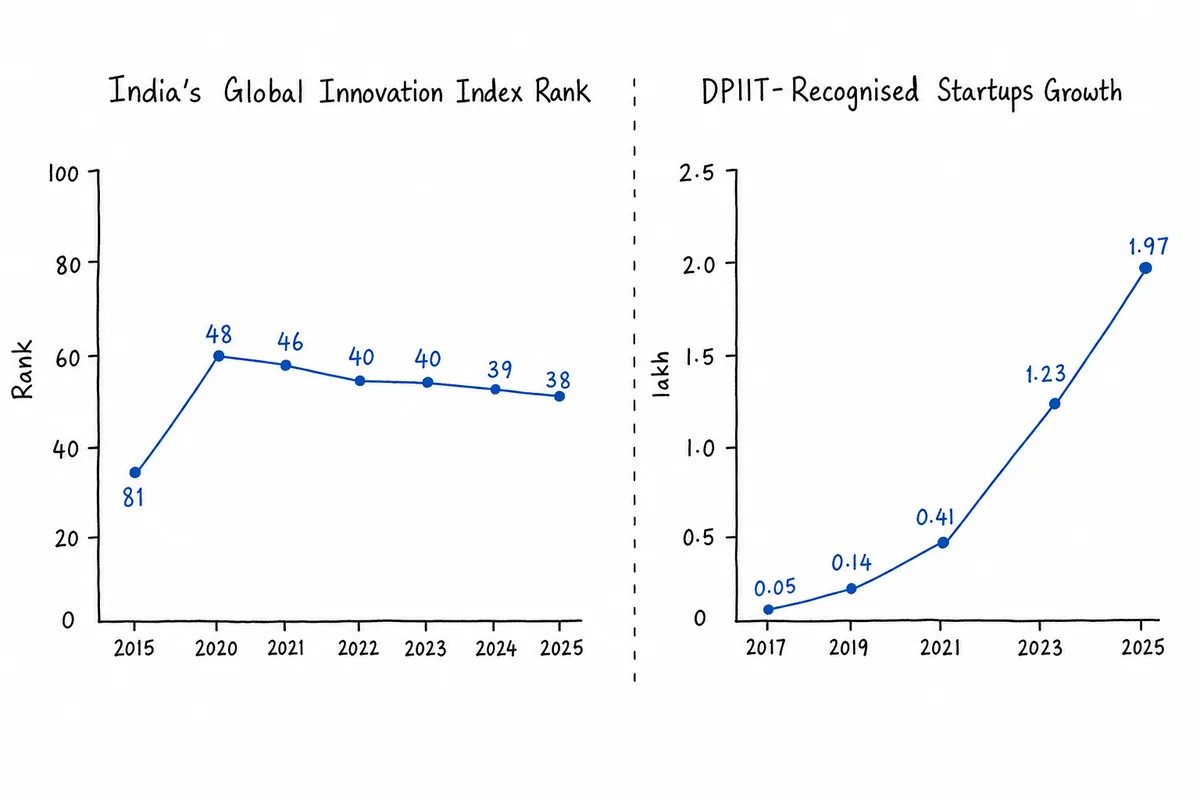
Startups widen entrepreneurship beyond metros, push frontier innovation and create jobs, but face global funding shocks, Big Tech and tariff pressure, weak governance, regulatory risk and a thin R&D base. DPIIT-recognised startups grew from about 5,000 in 2017 to 1.97 lakh in 2025.
Model answer
Ghissu Editorial · Verified 4 Oct 2026 · 298 words
Wider entrepreneurship
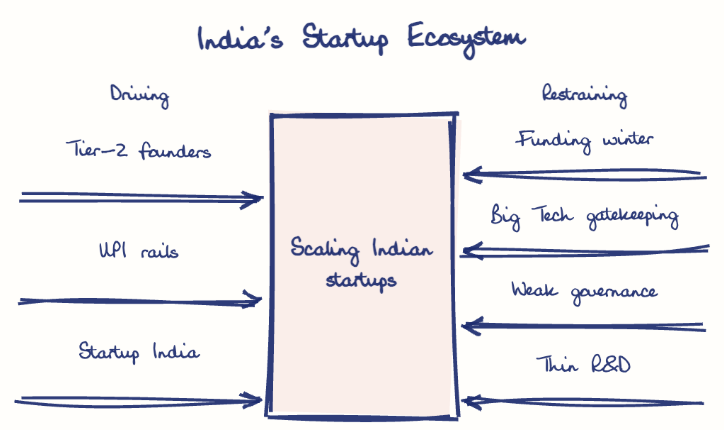
Nearly half the recognised startups come from tier-2 and tier-3 cities, spreading risk-taking beyond metros.
Frontier innovation
Fintechs on UPI and Skyroot's Vikram-S (2022), India's first private rocket, show startups at the technology frontier.
Employment
Platform startups such as Zomato and Swiggy drive gig work, which NITI Aayog (2022) projects to reach 2.35 crore workers by 2029-30.
Global funding cycles
US rate hikes triggered the 2022-23 funding winter, exposing dependence on foreign venture capital.
Big Tech and tariffs
Platform gatekeeping, penalised by the CCI against Google in 2022, and tariff wars squeeze scale-ups.
Governance and regulation
Byju's collapse exposed weak governance, while abrupt rules such as the 2025 real-money gaming ban raise risk.
Thin R&D base
Gross R&D spending of 0.84% of GDP (DST, 2023-24) pushes startups towards consumer apps over deep tech.
Patient domestic capital
Use the new Fund of Funds (Budget 2025-26) and the ₹1 lakh crore Research Development and Innovation scheme (2025) for deep tech.
Stable regulation
Build on the abolition of angel tax (2024) with consultative rule-making and regulatory sandboxes.
Governance and talent
Enforce board oversight for scale-ups and link the Anusandhan National Research Foundation to university incubators.
This model answer is indicative and the model can make mistakes; please verify key facts independently.
Practise this question
1Get the answer sheet
Sized for this question.
2Write your answer
Timed, by hand.
3Get it marked
Your score and what to fix.
This chapter in the exam
Industrial Growth4 questions
Asked in 3 of 14 sittings since 2013
- 2023Faster economic growth requires increased share of the manufacturing sector in GDP, particularly of MSMEs. Comment on the present policies of the Government in this regard.
- 2017Account for the failure of manufacturing sector in achieving the goal of labour-intensive exports. Suggest measures for more labour-intensive rather than capital-intensive exports.
All 4 questions, sorted by sub-topic, with model answers and practice.
Question from the official UPSC Civil Services (Main) Examination 2026 paper. Answer written by Ghissu's engine and checked against our editorial standards. Found an error? Tell us and we correct it within 48 hours.