Analyse the functions and functioning of National Commission for Scheduled Castes.
In short
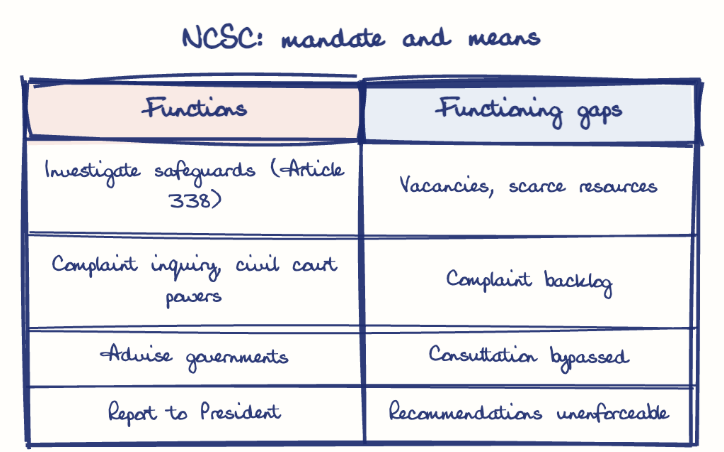
The National Commission for Scheduled Castes, under Article 338, investigates safeguards, inquires into complaints with civil court powers, advises on SC development and reports to the President. Vacancies, scarce resources and governments bypassing its advice weaken it, and in 2023-24 all its posts lay vacant for months.
Model answer
Ghissu Editorial · Verified 4 Oct 2026 · 252 words
Quasi-Judicial Powers
The Commission can inquire into complaints, summon witnesses, and requisition documents with the powers of a civil court, enabling it to act as a quasi-judicial body protecting SC rights.
Enforcement and Advisory Role
NCSC monitors laws like the Scheduled Castes and Scheduled Tribes (Prevention of Atrocities) Act, 1989, and advises governments, though recommendations often face delays; Andhra Pradesh3 CAG 2025 audit highlights gaps in education and nutrition schemes for SCs, showing limited policy impact.
Challenges in Redressal
Appointment delays, such as the prolonged vacancies of 2023-24, and limited manpower hamper timely complaint resolution and reduce field presence, affecting effectiveness.
Political and Administrative Constraints
The Commission’s autonomy is compromised by politically motivated appointments and inadequate funding, restricting its capacity to act independently on sensitive issues affecting SCs.
Resource Constraints
Vacancies and budget shortages limit outreach, with Andhra Pradesh exemplifying administrative expenditure issues that hinder investigative and monitoring activities.
This model answer is indicative and the model can make mistakes; please verify key facts independently.
Practise this question
1Get the answer sheet
Sized for this question.
2Write your answer
Timed, by hand.
3Get it marked
Your score and what to fix.
This chapter in the exam
Local governance (73rd/74th) and Constitutional Authorities13 questions
Asked in 6 of 8 sittings since 2008
Most tested: 73rd Amendment and the Finance Commission’s role in local body devolution/fiscal federalism
- 2025Discuss the significance of the 73rd Constitutional Amendment Act in strengthening grassroots democracy in India.
- 2025The Finance Commission is considered the backbone of fiscal federalism in India. Examine its role and significance in maintaining the financial balance between the Union and the States.
All 13 questions, sorted by sub-topic, with model answers and practice.
Question from the official APPSC Group-I Mains 2008 paper. Answer written by Ghissu's engine and checked against our editorial standards. Found an error? Tell us and we correct it within 48 hours.