Discuss the impact of Islam on Indian culture, with special reference to the Bhakti movements.
In short
Islam shaped Indian culture through monotheism, egalitarian ideals, Sufism, Indo-Islamic architecture, Urdu, Qawwali and vernacular literature, and it reinforced the Bhakti movement's devotion, equality and rejection of caste. Saints like Kabir and Guru Nanak embodied this Hindu-Islamic synthesis, which later inspired Sikhism.
Model answer
Ghissu Editorial · Verified 4 Oct 2026 · 240 words
Religious and Philosophical Synthesis
Islam introduced monotheism and egalitarian ideals, fostering Sufism’s blend of Islamic mysticism with Indian spirituality, promoting interfaith harmony.
Cultural and Artistic Integration
Indo-Islamic styles like Mughal architecture and the emergence of Urdu enriched Indian art and language, while Sufi Qawwali developed alongside Bhakti devotional music.
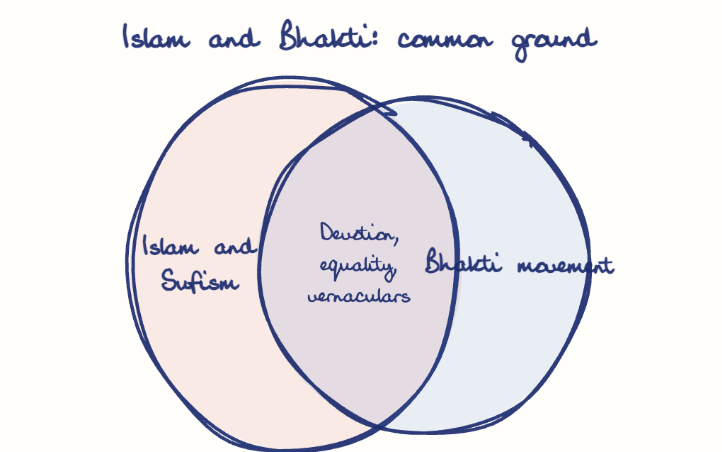
Shared Emphasis on Devotion and Equality
Both traditions emphasized personal devotion and social inclusiveness, with figures like Kabir and Guru Nanak embodying this synthesis.
Parallel Reformist Impulses
Bhakti’s critique of caste and ritualism resonated with Islamic calls for social justice, creating complementary reform dynamics.
Bhakti as a Response to Islamic Rule
The movement arose partly due to socio-political changes under Islamic conquests, fostering accessible spirituality beyond religious divides.
Promotion of Vernacular Languages
Bhakti’s use of local languages for spiritual expression paralleled Sufi encouragement of vernacular literature, enriching regional cultures.
Encourage Interfaith Dialogue
Promote programs highlighting Bhakti and Sufi shared values to strengthen pluralism.
Preserve Syncretic Heritage Sites
Conserve monuments linked to Bhakti and Sufi saints to sustain cultural legacy.
This model answer is indicative and the model can make mistakes; please verify key facts independently.
Sources
Practise this question
1Get the answer sheet
Sized for this question.
2Write your answer
Timed, by hand.
3Get it marked
Your score and what to fix.
This chapter in the exam
Early Medieval & Medieval India - Pallavas to Cholas, Delhi Sultanate, Bhakti & Sufi, Kakatiya-Vijayanagara-Bahmani-Qutubshahi13 questions
Asked in 8 of 8 sittings since 2008
Most tested: Medieval cultural history through Bhakti/Sufi and South Indian dynastic contributions to religion, architecture, and social organization.
- 2025Describe the contributions of the Chalukya rulers of Kalyani in the fields of sculpture, architecture, and literature.
- 2025Describe the characteristics of the Sufi movement and assess its impact on Indian culture.
All 13 questions, sorted by sub-topic, with model answers and practice.
Question from the official APPSC Group-I Mains 2011 paper. Answer written by Ghissu's engine and checked against our editorial standards. Found an error? Tell us and we correct it within 48 hours.