Describe the characteristics of the Sufi movement and assess its impact on Indian culture.
In short
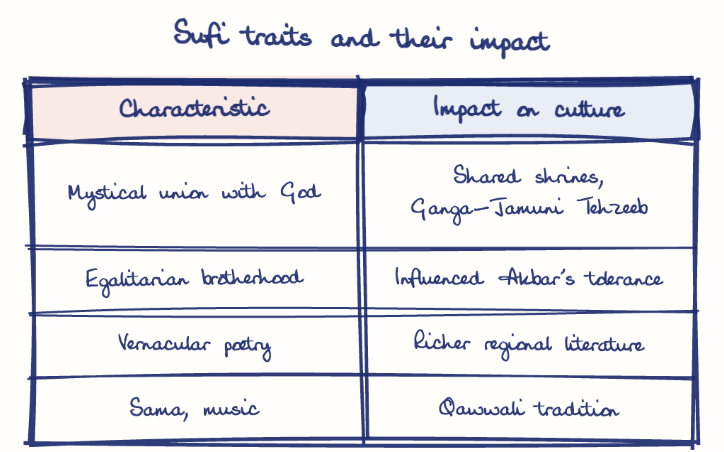
The Sufi movement was marked by mystical devotion to God, egalitarian brotherhood, vernacular preaching and organisation into silsilas with dhikr and sama rituals. It shaped Indian culture by fostering Ganga-Jamuni Tehzeeb, Amir Khusrau's qawwali, regional poetry and dargahs like Ajmer Sharif, and influenced Akbar's tolerance.
Model answer
Ghissu Editorial · Verified 4 Oct 2026 · 290 words
Egalitarian Brotherhood
Saints like Khwaja Moinuddin Chishti preached universal love beyond caste and creed, promoting social equality and communal harmony. Their inclusive approach welcomed followers from all backgrounds, breaking social barriers.
Promotion of Religious Harmony
Sufi shrines fostered Ganga-Jamuni Tehzeeb, easing communal tensions and inspiring rulers like Akbar to adopt religious tolerance through policies like Sulh-i-Kul (universal peace). These shrines became shared spaces for Hindus and Muslims alike.
Enrichment of Literature and Music
Amir Khusrau pioneered qawwali and blended Persian-Indian themes, enriching vernacular literature and music. Poets like Bulleh Shah spread Sufi ideals in Punjabi, making spirituality accessible to the masses.
Architectural Heritage
Dargahs like Ajmer Sharif and Nizamuddin Auliya’s shrine blend Persian and Indian styles, symbolizing cultural synthesis and serving as centers of art, culture, and charity.
Promote Sufi Heritage Tourism
Develop shrines as cultural hubs for communal harmony and economic growth through sustainable heritage tourism, preserving intangible cultural heritage.
Integrate Sufi Literature in Education
Include Sufi poetry and philosophy in curricula to deepen understanding of India’s syncretic traditions and pluralistic ethos, fostering social cohesion.
This model answer is indicative and the model can make mistakes; please verify key facts independently.
Practise this question
1Get the answer sheet
Sized for this question.
2Write your answer
Timed, by hand.
3Get it marked
Your score and what to fix.
This chapter in the exam
Early Medieval & Medieval India - Pallavas to Cholas, Delhi Sultanate, Bhakti & Sufi, Kakatiya-Vijayanagara-Bahmani-Qutubshahi13 questions
Asked in 8 of 8 sittings since 2008
Most tested: Medieval cultural history through Bhakti/Sufi and South Indian dynastic contributions to religion, architecture, and social organization.
- 2025Describe the contributions of the Chalukya rulers of Kalyani in the fields of sculpture, architecture, and literature.
- 2023Examine the manner in which the Chola village administration had contributed to the growth of village autonomy as indicated by the Uttaramerur/Uttaramallur inscriptions.
All 13 questions, sorted by sub-topic, with model answers and practice.
Question from the official APPSC Group-I Mains 2025 paper. Answer written by Ghissu's engine and checked against our editorial standards. Found an error? Tell us and we correct it within 48 hours.