Discuss on (i) Intellectual Property Rights. (ii) National Policy on Technology Missions.
In short
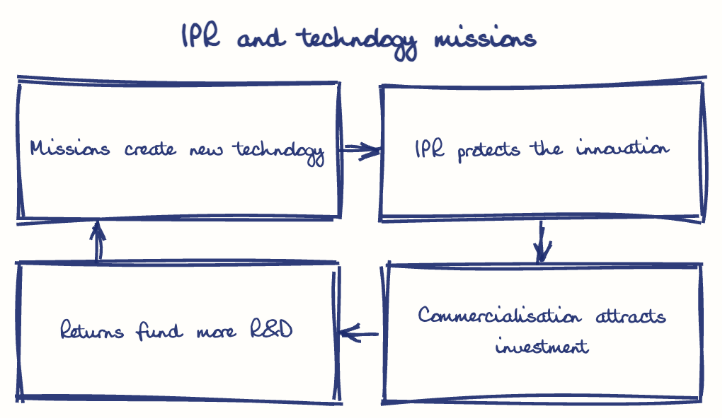
Intellectual Property Rights protect creations of the mind through patents, copyrights, trademarks, geographical indications and designs, rewarding innovation while balancing public access. Technology missions, launched in 1986-87 on drinking water, immunisation, literacy, oilseeds, dairy and telecom, apply science to national needs, and IPR protects the innovations they generate.
Model answer
Ghissu Editorial · Verified 4 Oct 2026 · 269 words
Economic Role and Challenges
IPR fosters R&D and start-ups, exemplified by the Start-Up Intellectual Property Protection Scheme extended till 2026, but must balance monopolies with public access, especially in pharmaceuticals.
Social Impact and Legal Balance
IPR also supports access to healthcare and environmental technologies, while compulsory licensing provisions ensure affordability and prevent misuse of patent rights.
Origin, Impact and Challenges
Launched in 1986-87 for drinking water, immunisation, literacy, oilseeds, dairy and telecom, the missions now extend to the India Semiconductor Mission, which has approved ₹1.60 lakh crore projects across six states, aiming to meet 70-75% of chip demand by 2029, but R&D investment remains low (~0.65% GDP). Talent shortages and regional disparities, such as in Rayalaseema, pose ongoing challenges.
Policy Synergy
National IPR Policy’s focus on legal frameworks and commercialization complements technology missions, with DPIIT integrating copyright and semiconductor layout design administration to create an enabling environment for innovation.
Way Forward
Boost R&D funding and modernize IPR infrastructure in Andhra Pradesh, promote inclusive innovation addressing Rayalaseema’s drought, and strengthen industry-academia linkages to translate technology missions into market-ready solutions.
This model answer is indicative and the model can make mistakes; please verify key facts independently.
Sources
Practise this question
1Get the answer sheet
Sized for this question.
2Write your answer
Timed, by hand.
3Get it marked
Your score and what to fix.
This chapter in the exam
Science, Technology & Innovation: policies, institutions, achievements20 questions
Asked in 7 of 8 sittings since 2008
Most tested: Science and technology policy and mission-mode institutions
- 2025Evaluate the impact of Internet of Things (IoT) technologies on the automation of household systems. Illustrate how everyday tasks have evolved due to IoT innovations.
- 2025Which are the major scientific institutes located in Andhra Pradesh? Discuss the role of IISER Tirupati in the scientific and educational development of the state.
All 20 questions, sorted by sub-topic, with model answers and practice.
Question from the official APPSC Group-I Mains 2011 paper. Answer written by Ghissu's engine and checked against our editorial standards. Found an error? Tell us and we correct it within 48 hours.