What are the effects of climate change on nature, sea level fluctuations, plants and animal migration, changes in insect pests?
In short
Climate change breaks ecological timing and raises extinction risk, lifts sea levels with storm surges and salinity, pushes species to migrate, and makes insect pests more numerous and widespread. In Andhra Pradesh, they appear as coastal flooding from cyclone Hudhud and heavier pest attacks on chilli and paddy.
Model answer
Ghissu Editorial · Verified 4 Oct 2026 · 263 words
Biodiversity Disruption
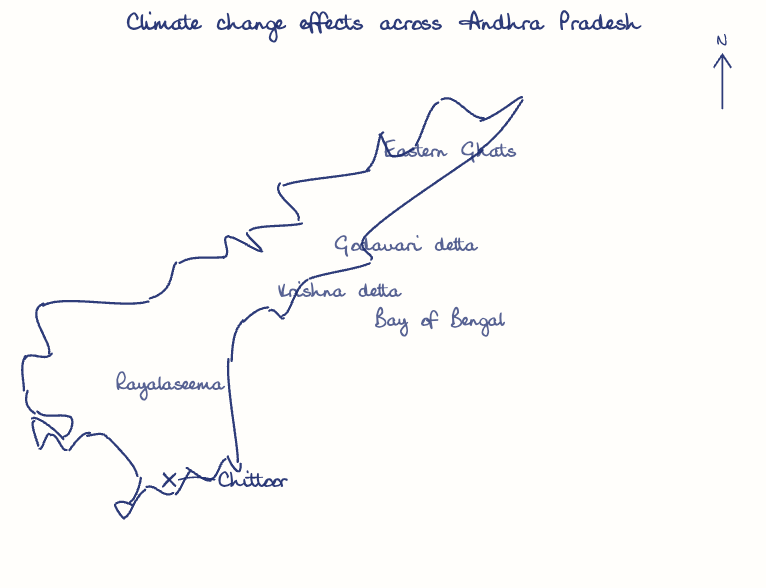
In Andhra Pradesh’s Eastern Ghats, shifts in monsoon patterns disrupt ecological interactions, threatening endemic species and ecosystem stability. This leads to mismatches in pollination and food availability, undermining ecosystem functions.
Accelerated Sea Level Rise
Andhra Pradesh’s coast faces sea level rise exceeding global averages (~300 mm), causing erosion and saline intrusion into freshwater sources, impacting agriculture and drinking water.
Coastal Flooding
Cyclones Hudhud and Titli caused flooding in Visakhapatnam and Srikakulam, damaging agriculture and infrastructure, threatening livelihoods. Increased storm surges also exacerbate salinity ingress, affecting aquaculture and horticulture sectors.
Range Shifts
Birds and butterflies in Andhra Pradesh shift altitudinally due to warming, altering biodiversity composition and ecosystem dynamics.
Human-Wildlife Conflicts
Animal migration towards settlements in Chittoor increases conflicts, complicating conservation and community safety, highlighting the need for dynamic management approaches.
Increased Pest Incidence
Warmer temperatures favor pests in chillies and paddy, increasing pesticide use and costs in Andhra Pradesh, threatening crop yields and farmer incomes.
Expanded Pest Ranges
Climate change enables pests to invade new areas, intensifying infestations and posing risks to food security across vulnerable agricultural zones.
This model answer is indicative and the model can make mistakes; please verify key facts independently.
Practise this question
1Get the answer sheet
Sized for this question.
2Write your answer
Timed, by hand.
3Get it marked
Your score and what to fix.
This chapter in the exam
Development vs Environment: natural resources, climate change, EIA, natural disasters48 questions
Asked in 8 of 8 sittings since 2008
Most tested: Climate change and mining/environmental degradation links
- 2025Explain the different types of natural resources in India. How are they being conserved through government initiatives?
- 2025Investigate the relationship between mining activities and the occurrence of earthquakes. Explain how mining operations can be regulated to minimize seismic risks.
All 48 questions, sorted by sub-topic, with model answers and practice.
Question from the official APPSC Group-I Mains 2012 paper. Answer written by Ghissu's engine and checked against our editorial standards. Found an error? Tell us and we correct it within 48 hours.