What is Lactic acid fermentation? Explain how different products can be made by fermentation of milk?
In short
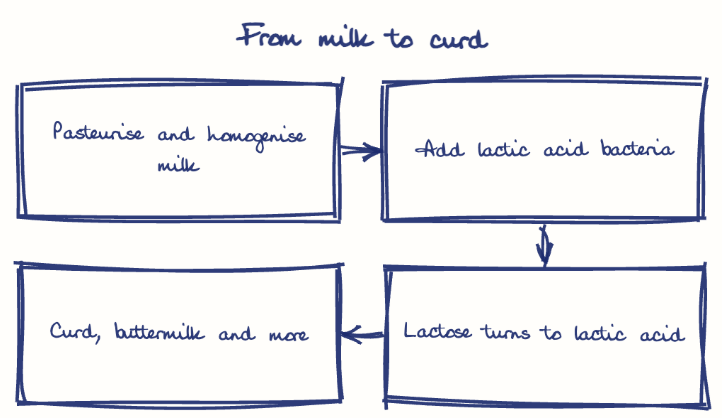
Lactic acid fermentation is the conversion of milk lactose into lactic acid by lactic acid bacteria, which lowers pH, preserves milk and develops flavour. Different cultures, durations and temperatures yield curd (dahi) from Lactobacillus and Streptococcus cultures, buttermilk, lassi, yoghurt and cheese, adding probiotics and value for dairy farmers.
Model answer
Ghissu Editorial · Verified 4 Oct 2026 · 263 words
Dairy Cooperatives1' Role
Dairy cooperatives in Andhra Pradesh facilitate milk collection and processing, empowering women who make up 70% of the dairy workforce and enabling fermented product production. These cooperatives also provide training and access to quality starter cultures, improving product consistency.
Processing Infrastructure and Standards
Pasteurization and homogenization ensure milk safety before fermentation; regulatory standards maintain microbial safety and product consistency, supporting market acceptance. The Food Safety and Standards Authority of India (FSSAI) guidelines help regulate fermentation processes to ensure health benefits and consumer trust.
Challenges and Benefits
Inadequate cold storage and lack of standardization limit small-scale producers in Andhra Pradesh, but fermented products enhance micronutrient bioavailability, provide probiotics, and reduce milk wastage. Research institutions work on optimizing bacterial strains to improve shelf life and nutritional quality.
Rural Livelihood Enhancement
Fermentation-based dairy enterprises foster entrepreneurship among women and smallholders via cooperatives and self-help groups in Andhra Pradesh. This creates additional income streams beyond raw milk sales, strengthening rural economies.
This model answer is indicative and the model can make mistakes; please verify key facts independently.
Sources
Practise this question
1Get the answer sheet
Sized for this question.
2Write your answer
Timed, by hand.
3Get it marked
Your score and what to fix.
This chapter in the exam
Biotechnology & Nanotechnology: scope, ethics, genetic engineering, biodiversity, fermentation, immuno-diagnosis50 questions
Asked in 8 of 8 sittings since 2008
Most tested: Biodiversity and biotechnology governance/ethics, especially conservation, GMOs, and applied public-health biotech.
- 2025Trace the evolution of India's National Biotechnology Development Strategy (NBDS) and discuss its key objectives. Critically evaluate its impact on the growth of the biotechnology sector in India.
- 2025Analyze the potential of plant-derived biopharmaceuticals in promoting sustainable healthcare. Explain how the application of green pharmacy principles can help minimize environmental harm at each stage of the pharmaceutical lifecycle.
All 50 questions, sorted by sub-topic, with model answers and practice.
Question from the official APPSC Group-I Mains 2016 paper. Answer written by Ghissu's engine and checked against our editorial standards. Found an error? Tell us and we correct it within 48 hours.