Write a brief note on aetiology, mode of spread, symptoms, treatment and preventive measures of malarial parasite?
In short
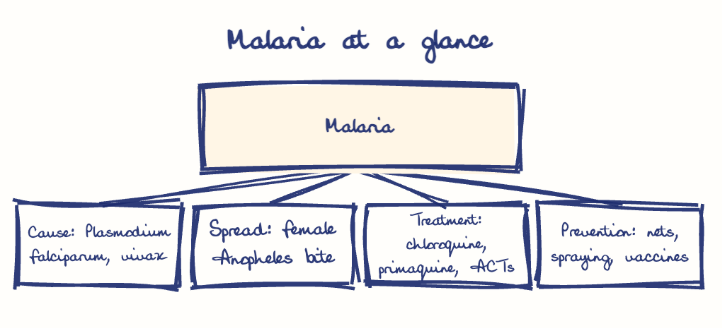
Malaria is caused by Plasmodium parasites, mainly falciparum and vivax, spread by the bite of female Anopheles mosquitoes and causing fever, chills, headache and fatigue. It is treated with drugs such as chloroquine and primaquine, and prevented through treated nets, indoor residual spraying, vaccines like R21 and early diagnosis.
Model answer
Ghissu Editorial · Verified 4 Oct 2026 · 254 words
National Strategic Plan and IMEP-31
India’s National Strategic Plan (2023-27) targets zero indigenous malaria cases by 2030, with the Intensified Malaria Elimination Project (IMEP)-3 and Test, Treat, Track strategy strengthening surveillance, diagnosis, and treatment, especially in Andhra Pradesh. These initiatives enhance capacity at primary health centres and community levels.
Vaccine Advances
WHO-approved vaccines RTS,S/AS01 and R21/Matrix-M mark breakthroughs; India’s participation in trials and deployment is vital for complementing vector control and reducing disease burden.
Drug Resistance and Treatment
Drug-resistant P. falciparum strains complicate treatment; artemisinin-based combination therapies (ACTs) are increasingly used alongside chloroquine and primaquine in Andhra Pradesh. Continuous monitoring by the National Vector Borne Disease Control Programme ensures timely updates to treatment protocols.
Vector Control and Prevention
Insecticide-treated nets and indoor residual spraying remain frontline measures, but insecticide resistance and mosquito behavioural adaptation require integrated vector management approaches, including environmental management and community participation.
Surveillance and Community Engagement
Strengthening digital surveillance systems and community education in Andhra Pradesh improves early diagnosis, treatment adherence, and outbreak response, reducing transmission cycles.
This model answer is indicative and the model can make mistakes; please verify key facts independently.
Sources
Practise this question
1Get the answer sheet
Sized for this question.
2Write your answer
Timed, by hand.
3Get it marked
Your score and what to fix.
This chapter in the exam
Human diseases; genetic engineering basics; biotechnology in agriculture; vaccines54 questions
Asked in 8 of 8 sittings since 2008
Most tested: Vaccines and immunisation, alongside GM crops/biotech agriculture.
- 2025Discuss the transmission dynamics of respiratory tract infections in densely populated urban settings. Propose effective public health strategies for their prevention.
- 2025Examine how urban infrastructure influences the implementation of preventive measures during microbial disease outbreaks. Suggest technology-driven solutions.
All 54 questions, sorted by sub-topic, with model answers and practice.
Question from the official APPSC Group-I Mains 2016 paper. Answer written by Ghissu's engine and checked against our editorial standards. Found an error? Tell us and we correct it within 48 hours.