Write a note on Andhra Pradesh Sand Mining Policy, 2016.
In short
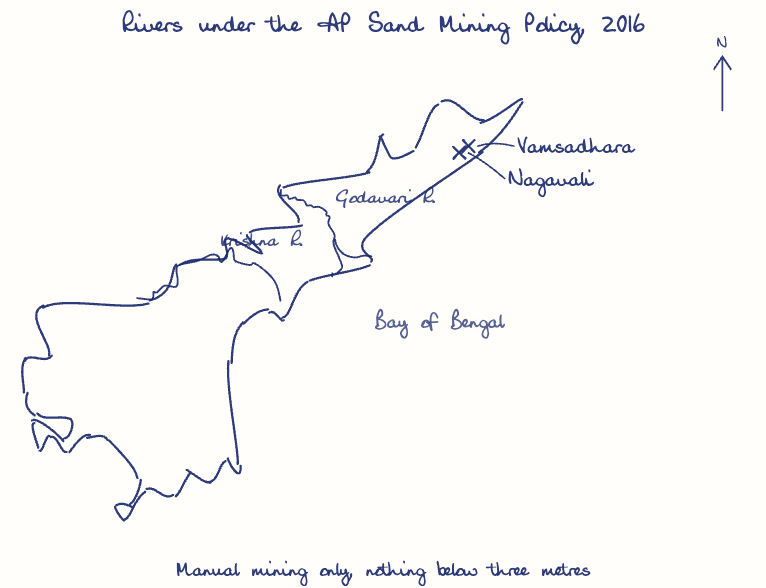
The Andhra Pradesh Sand Mining Policy, 2016 made sand free of seigniorage for consumers, who pay only loading and transport charges, and allowed only manual or animal-driven extraction under district sand committees led by the Collector. It also banned mining below three metres in riverbeds, though illegal mining persisted.
Model answer
Ghissu Editorial · Verified 4 Oct 2026 · 281 words
Policy Objectives
The policy restricts sand mining to manual and animal-driven methods, banning mechanised equipment such as poclaines to reduce environmental damage and groundwater depletion. It also prohibits mining below three metres in riverbeds to prevent erosion and maintain groundwater recharge.
Illegal Mining and Revenue Loss
Despite the policy, illegal mining persists due to weak enforcement; CAG audit flags 2%-52% revenue shortfalls (2017-22) and compliance gaps in Andhra Pradesh’s mining districts. Corruption and inadequate monitoring undermine revenue collection and environmental safeguards.
Social and Environmental Impact
Illegal mechanised mining displaces manual labourers and causes ecological harm; Supreme Court directions on illegal mining and recovery of costs remain challenging to implement. Delays in Environmental Impact Assessment processes further complicate sustainable mining operations.
Technology and Community Role
Satellite monitoring and GIS mapping can improve enforcement; empowering Panchayats and Gramsabhas enhances local oversight and reduces illegal extraction.
Integration with DMF and Capacity Building
Using District Mineral Foundation funds for community development and training officials on regulatory frameworks and environmental safeguards can improve policy outcomes and address social and ecological concerns.
This model answer is indicative and the model can make mistakes; please verify key facts independently.
Practise this question
1Get the answer sheet
Sized for this question.
2Write your answer
Timed, by hand.
3Get it marked
Your score and what to fix.
This chapter in the exam
Development vs Environment: natural resources, climate change, EIA, natural disasters48 questions
Asked in 8 of 8 sittings since 2008
Most tested: Climate change and mining/environmental degradation links
- 2025Explain the different types of natural resources in India. How are they being conserved through government initiatives?
- 2025Investigate the relationship between mining activities and the occurrence of earthquakes. Explain how mining operations can be regulated to minimize seismic risks.
All 48 questions, sorted by sub-topic, with model answers and practice.
Question from the official APPSC Group-I Mains 2016 paper. Answer written by Ghissu's engine and checked against our editorial standards. Found an error? Tell us and we correct it within 48 hours.