Discuss the evolution of tenancy reforms in Andhra Pradesh and also explain the main features of the Andhra Pradesh (Andhra Area) Tenancy Act, 1956 including the amendments to the Act.
In short
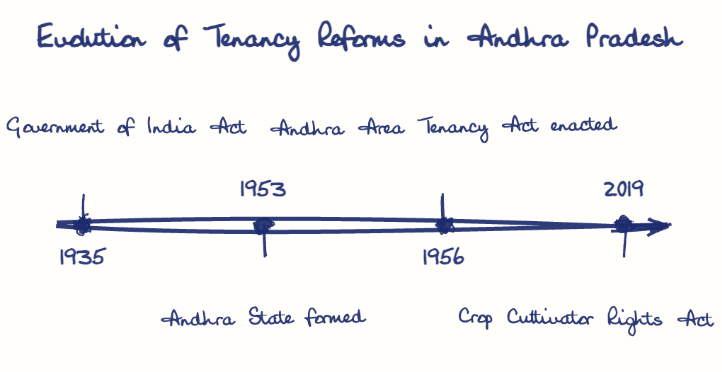
Tenancy reform in Andhra Pradesh moved from colonial neglect to tenant protection under the Andhra Area Tenancy Act 1956, which set six-year leases, rent caps of 25-30% of produce and purchase rights. Later laws in 2011 and 2019 shifted towards benefit cards that favour landowners.
Model answer
Ghissu Editorial · Verified 4 Oct 2026 · 327 words
Colonial and Early Post-Independence Context
The 1935 Government of India Act introduced decentralization but failed to empower tenants; after Andhra State’s formation in 1953, tenancy reforms became central, culminating in the 1956 Act to protect tenants amid exploitative landlord relations.
Tenancy Trends and Challenges
Andhra Pradesh had a tenancy rate of 34.8% in 2012-13, much higher than the national average of 10.3%, with Scheduled Castes disproportionately affected; informal leases limited tenant access to benefits.
Lease Security and Rent Regulation
The Act mandated six-year leases with automatic renewal, fixed maximum rent at 30% of produce for irrigated land and 25% for unirrigated, and allowed rent remission during crop failure.
Tenant Rights and Dispute Resolution
Tenants had first purchase rights at five times rent, and disputes were adjudicated by special officers with appeals to district judges; exclusions included plantations and government lands.
Legislative Updates
The 2011 Land Licensed Cultivators Act and its successor, the 2019 Andhra Pradesh Crop Cultivator Rights Act, shifted the focus to benefit cards for tenants, but critics argue it liberalizes tenancy excessively, favoring landlords and weakening tenant protections.
This model answer is indicative and the model can make mistakes; please verify key facts independently.
Practise this question
1Get the answer sheet
Sized for this question.
2Write your answer
Timed, by hand.
3Get it marked
Your score and what to fix.
This chapter in the exam
Agriculture Development in Andhra Pradesh31 questions
Asked in 8 of 8 sittings since 2008
Most tested: Agriculture’s structure, performance, and state policy interventions in Andhra Pradesh.
- 2025Discuss the role of agriculture in the economic development of Andhra Pradesh. How has agriculture contributed to the State Gross Domestic Product (SGDP) in recent years? Identify the key drivers influencing its performance.
- 2025What are the key drivers for the growth of the fisheries sector? What are the schemes undertaken by the fisheries department for the growth of this sector?
All 31 questions, sorted by sub-topic, with model answers and practice.
Question from the official APPSC Group-I Mains 2017 paper. Answer written by Ghissu's engine and checked against our editorial standards. Found an error? Tell us and we correct it within 48 hours.