Explain the concept of emotional intelligence with special reference to the three main models of emotional intelligence. How are emotional intelligence applied in administration and governance?
In short
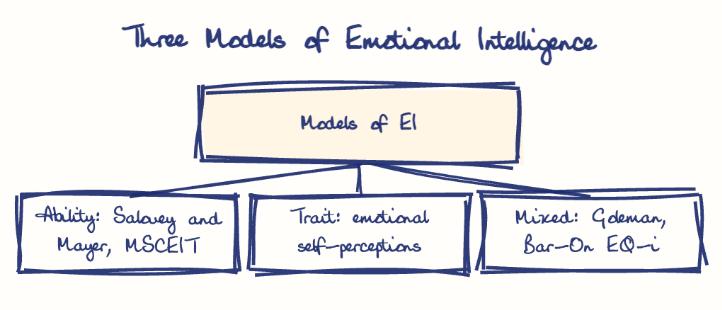
Emotional intelligence is the ability to understand and manage one's own and others' emotions, explained by the ability model (Salovey and Mayer), the trait model and Goleman's mixed model. In administration it aids decision-making, empathetic service delivery and conflict resolution, and can be built through Mission Karmayogi training.
Model answer
Ghissu Editorial · Verified 4 Oct 2026 · 271 words
Ethical Importance
EI supports constitutional morality by promoting impartiality, integrity, and accountability in public administration. It helps civil servants uphold ethical standards even under pressure, fostering trust in governance.
Ability Model
Salovey and Mayer’s model treats EI as cognitive abilities to perceive, use, understand, and regulate emotions for better decision-making. It views emotions as valuable information for intellectual growth.
Mixed Model
Goleman’s model combines emotional abilities with personality traits and competencies; assessed by MSCEIT and Bar-On EQ-i, it informs training like Mission Karmayogi’s behavioural competency framework, which integrates EI for capacity building in public administration.
Public Service Delivery
Empathy enhances responsiveness, exemplified by Andhra Pradesh’s grievance redressal system, where officers’ social skills improve communication and conflict resolution.
Team Cohesion and Conflict Management
EI fosters teamwork and diffuses conflicts, relevant to Andhra Pradesh’s diverse social fabric, enabling administrators to manage communal tensions through dialogue and perspective-taking.
This model answer is indicative and the model can make mistakes; please verify key facts independently.
Practise this question
1Get the answer sheet
Sized for this question.
2Write your answer
Timed, by hand.
3Get it marked
Your score and what to fix.
This chapter in the exam
Attitude and Emotional intelligence6 questions
Asked in 3 of 8 sittings since 2008
Most tested: Attitude as a determinant of public servant behaviour, including its components and behavioural impact.
- 2025Explain the difference between cognitive, affective and behavioural components of attitude with suitable examples in the public service context.
- 2025Define attitude. How does attitude affect the behaviour of public servants?
All 6 questions, sorted by sub-topic, with model answers and practice.
Question from the official APPSC Group-I Mains 2020 paper. Answer written by Ghissu's engine and checked against our editorial standards. Found an error? Tell us and we correct it within 48 hours.