Critically assess the effectiveness of major disaster management initiatives undertaken in India since the enactment of the Disaster Management Act, 2005.
In short
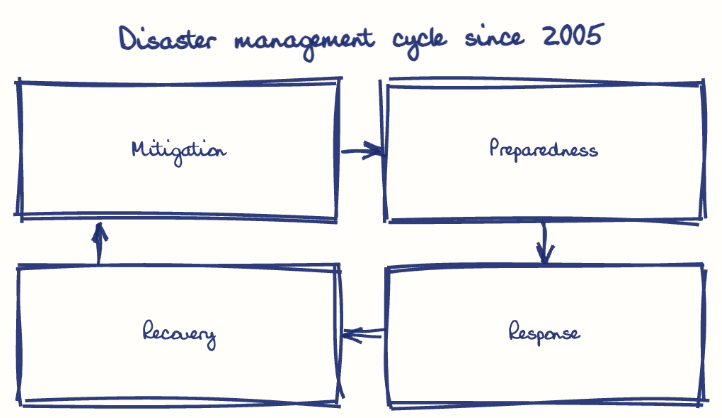
Since the Disaster Management Act, 2005, India has built NDMA and state authorities, a 16-battalion NDRF, better forecasting and SDRF funding, sharply cutting cyclone deaths on coasts like Andhra Pradesh's. Mitigation, recovery and local capacity still lag behind response, as delayed Polavaram rehabilitation shows.
Model answer
Ghissu Editorial · Verified 4 Oct 2026 · 267 words
Financial Mechanisms
The State Disaster Response Fund (SDRF) ensures quick financial aid for relief, benefiting states including Andhra Pradesh. Additionally, the National Policy on Disaster Management (2009) mainstreams disaster resilience into development planning.
Preparedness and Technology
NDMA-led initiatives expanded NDRF battalions and seismic observatories (80 in 2014 to 168 by 2025), improving early warnings; timely cyclone alerts reduced casualties in Andhra Pradesh. The Earthquake Risk Indexing project further enhances readiness.
Mitigation and Recovery Gaps
The Polavaram Project6 audit revealed delays and rehabilitation issues; Andhra Pradesh audits also flagged delays in resettling displaced families. Recovery efforts face administrative delays, highlighting challenges in translating policy into action.
Weaknesses
Centralized control limits state autonomy; overlapping agency roles cause coordination issues; implementation gaps persist, as shown by Andhra Pradesh audit reports. Equity concerns remain due to insufficient community engagement and capacity building.
Decentralize Authority
Empower local bodies in Andhra Pradesh for tailored disaster management and faster decision-making.
Integrate Climate Adaptation
Mainstream climate risk into policies for vulnerable regions like Andhra Pradesh, addressing coastal and drought-prone challenges.
This model answer is indicative and the model can make mistakes; please verify key facts independently.
Practise this question
1Get the answer sheet
Sized for this question.
2Write your answer
Timed, by hand.
3Get it marked
Your score and what to fix.
This chapter in the exam
Pollution & solid waste; global issues; environmental legislation; disaster management policy; agricultural revolutions43 questions
Asked in 8 of 8 sittings since 2008
Most tested: Solid waste management and pollution-control legislation
- 2025What are the key principles of Integrated Solid Waste Management (ISWM)? Discuss the role of waste hierarchy in ISWM.
- 2025Define global warming, and differentiate it clearly from climate change. Explain the key natural and human-induced causes of global warming and briefly discuss which factors are currently dominant in driving global temperature rise.
All 43 questions, sorted by sub-topic, with model answers and practice.
Question from the official APPSC Group-I Mains 2025 paper. Answer written by Ghissu's engine and checked against our editorial standards. Found an error? Tell us and we correct it within 48 hours.