Define genetic engineering. Explain its applications in agriculture and medicine.
In short
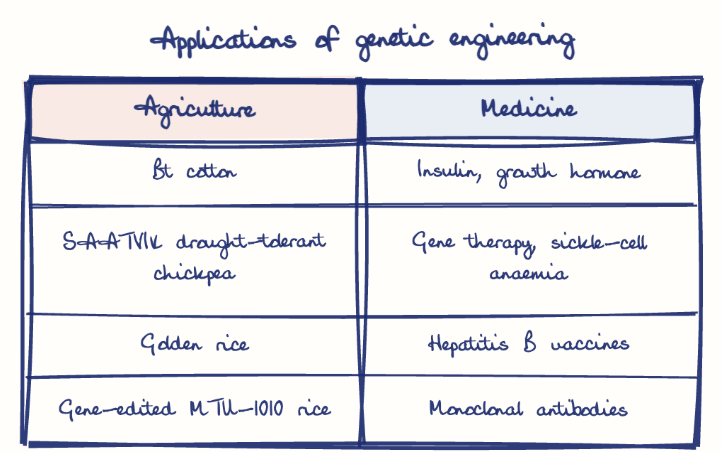
Genetic engineering is the deliberate manipulation of an organism's DNA through recombinant DNA, gene cloning and CRISPR-Cas9 editing to create traits conventional breeding cannot. It yields pest-resistant Bt cotton, drought-tolerant SAATVIK chickpea and gene-edited rice in agriculture, and recombinant insulin, gene therapy and vaccines in medicine.
Model answer
Ghissu Editorial · Verified 4 Oct 2026 · 251 words
Precise Genetic Modification
Techniques like CRISPR-Cas9 and recombinant DNA create GMOs with traits unattainable by traditional breeding; ICAR’s gene-edited rice built on the Andhra-bred MTU-1010 variety demonstrates this advancement.
Climate-Resilient Crops
Varieties like SAATVIK (NC9) chickpea approved by the Central Sub-committee on Crop Standards1 aid drought-prone regions such as Rayalaseema by enhancing tolerance to climate stress.
Pest Resistance and Nutrition
Bt cotton reduces pesticide use and increases yields; golden rice combats micronutrient deficiencies by enriching vitamin A precursors; Andhra Pradesh’s shrimp aquaculture benefits from molecular disease diagnostics that reduce crop losses.
Therapeutic Protein Production
Genetic engineering mass-produces medicines like insulin, through recombinant DNA technology in bacteria, with Indian firms producing affordable recombinant insulin.
Gene Therapy and Vaccines
Gene therapy corrects hereditary diseases like sickle-cell anemia; genetically engineered vaccines, produced by India’s Serum Institute, have revolutionized disease prevention and global health.
Strengthen R&D and Collaboration
Andhra Pradesh should boost funding, infrastructure, and expand Biotech-KISAN hubs to link cutting-edge research with practical farming solutions.
This model answer is indicative and the model can make mistakes; please verify key facts independently.
Sources
Practise this question
1Get the answer sheet
Sized for this question.
2Write your answer
Timed, by hand.
3Get it marked
Your score and what to fix.
This chapter in the exam
Human diseases; genetic engineering basics; biotechnology in agriculture; vaccines54 questions
Asked in 8 of 8 sittings since 2008
Most tested: Vaccines and immunisation, alongside GM crops/biotech agriculture.
- 2025Discuss the transmission dynamics of respiratory tract infections in densely populated urban settings. Propose effective public health strategies for their prevention.
- 2025Examine how urban infrastructure influences the implementation of preventive measures during microbial disease outbreaks. Suggest technology-driven solutions.
All 54 questions, sorted by sub-topic, with model answers and practice.
Question from the official APPSC Group-I Mains 2025 paper. Answer written by Ghissu's engine and checked against our editorial standards. Found an error? Tell us and we correct it within 48 hours.