Examine the influence of Islam on Indian Culture with suitable examples.
In short
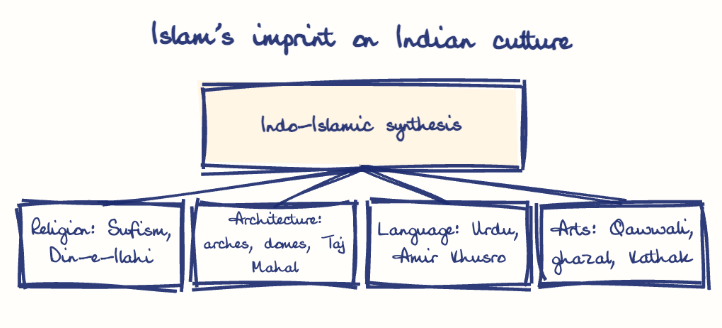
Islam shaped Indian culture through Sufi monotheism and brotherhood, the arcuate architecture of domes and arches, the Urdu language and new music and dance forms. Examples include the Qutub Minar, Gol Gumbaz and Taj Mahal, Akbar's Din-e-Ilahi, Amir Khusro's poetry, and qawwali and Kathak.
Model answer
Ghissu Editorial · Verified 4 Oct 2026 · 237 words
Religious Syncretism
Sufism’s universal brotherhood appealed across communities; Akbar’s Din-e-Ilahi blended multiple faiths, reflecting indigenous Muslim identity in India1. The Bhakti and Sufi movements together fostered communal harmony and spiritual inclusiveness.
Architectural Innovation
Islamic arcuate construction merged with local styles, creating Indo-Islamic monuments like the Taj Mahal and Gol Gumbaz; Sohel Hashmi2 critiques this as syncretic symbolism beyond religious essentialism. The use of calligraphy and geometric patterns also enriched Indian aesthetics.
Everyday Culture
Islam shaped dress such as the sherwani, cuisine such as Hyderabadi biryani and kebabs, and festivals shared across communities. Muslim contributions to Indian music, such as qawwali and instruments like the sitar, further illustrate cultural integration.
Preserve Syncretic Heritage
Strengthen conservation of Indo-Islamic monuments under UNESCO and national programs to maintain cultural continuity and promote tourism.
Promote Inclusive Education
Integrate Indo-Islamic cultural studies in curricula to foster appreciation of composite culture and counter communal biases.
This model answer is indicative and the model can make mistakes; please verify key facts independently.
Sources
Practise this question
1Get the answer sheet
Sized for this question.
2Write your answer
Timed, by hand.
3Get it marked
Your score and what to fix.
This chapter in the exam
Islam, Bhakti and Sufi, Kakatiya to Mughal culture, composite culture3 questions
Asked in 2 of 2 sittings since 2016
Most tested: Composite culture through Islam’s influence and Indo-Islamic architectural fusion
Question from the official TGPSC Group-I Mains 2016 paper. Answer written by Ghissu's engine and checked against our editorial standards. Found an error? Tell us and we correct it within 48 hours.