Discuss the ideological differences between Gandhi and Ambedkar on Socio-Political issues and how the Poona Pact of 1932 showed the way.
In short
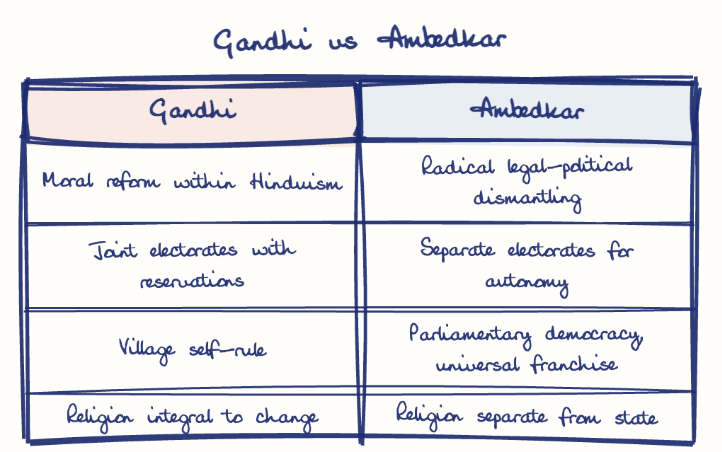
Gandhi sought to end untouchability through moral reform within Hinduism and village self-rule, while Ambedkar wanted caste dismantled through law, separate electorates and parliamentary democracy. The Poona Pact of 1932 bridged them by replacing separate electorates with more reserved seats in joint electorates, a model the Constitution later adopted.
Model answer
Ghissu Editorial · Verified 4 Oct 2026 · 334 words
Separate Electorates Debate
Ambedkar demanded separate electorates for depressed classes to secure political autonomy and safeguard their interests; Gandhi opposed this fearing Hindu disunity, leading to his fast unto death against the Communal Award, which granted separate electorates.
Poona Pact as Compromise
Signed in Yerawada Jail, the Pact abandoned separate electorates but increased reserved seats in joint electorates, reflecting Gandhi’s integrationist approach and Ambedkar’s reluctant acceptance under moral pressure to save Gandhi’s life.
Dalit Leadership and Autonomy
The Pact subordinated Dalit political identity within Hindu society, limiting independent leadership and diluting Ambedkar’s vision of autonomous empowerment. This often led to Dalits being co-opted by dominant caste groups, weakening their political voice.
Legal and Educational Empowerment
Reflecting Ambedkar’s vision, constitutional safeguards like reservations and anti-discrimination laws must be strengthened alongside expanding access to quality education to dismantle caste discrimination structurally.
Inclusive Decentralization
Panchayati Raj reforms, supported by the LM Singhvi Committee (1986), can empower marginalized groups while preventing caste exploitation, ensuring local governance is truly inclusive and equitable.
This model answer is indicative and the model can make mistakes; please verify key facts independently.
Sources
Practise this question
1Get the answer sheet
Sized for this question.
2Write your answer
Timed, by hand.
3Get it marked
Your score and what to fix.
This chapter in the exam
Revolts of the 19th century, 1857, socio-religious and anti-caste movements5 questions
Asked in 2 of 2 sittings since 2016
Most tested: Anti-caste and social reform movements’ impact on Indian society and politics.
- 2024The major 19th Century tribal movements such as the Santhal Rebellion and the Munda Rebellion shaped the trajectory of Indian resistance against colonial rule. Discuss.
- 2024The nature of British rule and colonial policies significantly altered after the 1857 revolt. Discuss.
All 5 questions, sorted by sub-topic, with model answers and practice.
Question from the official TGPSC Group-I Mains 2024 paper. Answer written by Ghissu's engine and checked against our editorial standards. Found an error? Tell us and we correct it within 48 hours.